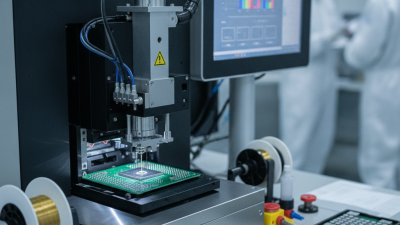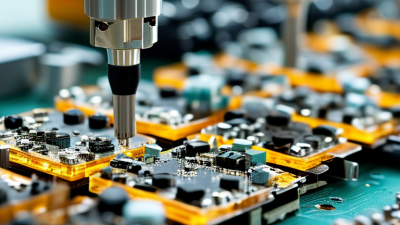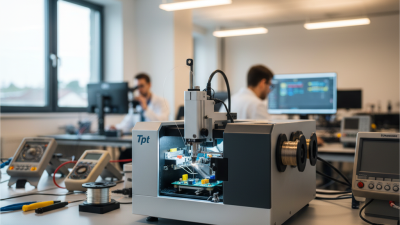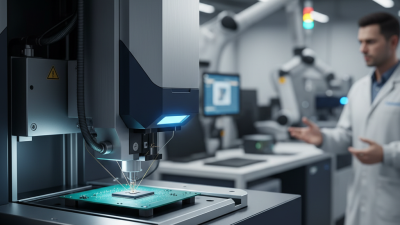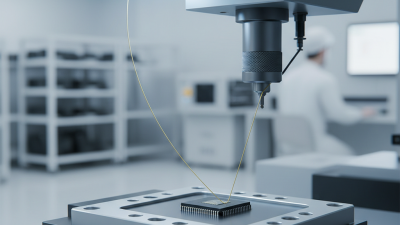
Choosing the best China Die Pick Up And Place machine supplier requires more than comparing prices or catalog photographs. Semiconductor packaging lines depend on stable handling, accurate alignment, and repeatable placement. A suitable machine should manage delicate dies without chipping corners, contaminating surfaces, or damaging adhesive layers. During evaluation, buyers should inspect the vacuum nozzle design, camera resolution, motion control, and placement accuracy. Ask for test results using dies similar to your own products.
Reliable Chinese suppliers often provide machines for wafer-level packaging, LED assembly, sensors, and power semiconductor applications. However, product descriptions may not reveal everything. Request a live demonstration. Watch how the machine picks a small die from a wafer frame and places it onto a substrate. Check the cycle time, rejection rate, changeover process, and software response. These details show practical capability.
Experience matters.
A professional supplier should explain maintenance intervals, spare-part availability, operator training, and remote support. Factory audits can also confirm production quality, calibration practices, and final inspection procedures. Certifications are useful, but they do not replace technical evidence or customer references. Buyers should compare total ownership costs, including installation, tooling, consumables, and service travel.
The word “best” remains subjective. A high-speed system may not suit fragile dies or frequent product changes. A lower-cost model may require more manual adjustment. This is where careful reflection becomes necessary. Define your die size, placement tolerance, throughput target, and future expansion plans before selecting a supplier. A trustworthy China Die Pick Up And Place machine partner will discuss limitations openly, not promise perfect results without testing.
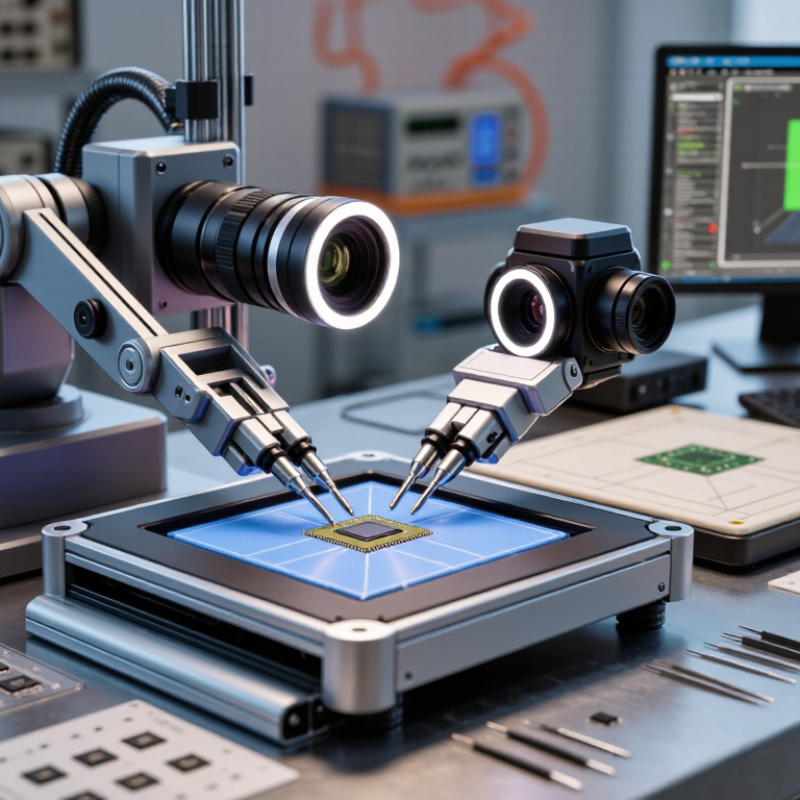
A die pick up and place machine transfers individual semiconductor dies from a wafer frame to a substrate, leadframe, or package. Its ejector needle gently lifts each die, while a vacuum collet holds and positions it. A vision system checks orientation, edges, and placement coordinates before bonding.
The process looks simple. It is not. Motion stages must manage micron-level accuracy, fragile silicon, adhesive thickness, and substrate warpage. Production teams usually evaluate placement accuracy, pick-up yield, cycle time, die-size range, and changeover speed. A machine can place thousands of units per hour, but speed alone may hide excessive chipping or missed pickups. That is where practical factory trials matter.
Yole Group estimated the advanced packaging market at about 46 billion US dollars in 2023, with growth toward roughly 79 billion dollars by 2029. SEMI also forecast global semiconductor manufacturing equipment sales above 100 billion dollars in 2024, showing strong investment across packaging and assembly. These figures do not guarantee every supplier’s performance. Buyers should request traceable test data, sample layouts, maintenance records, and long-run yield results. A careful assessment should include real dies, real adhesives, and actual substrate conditions. The first trial may expose problems that a polished specification sheet misses.
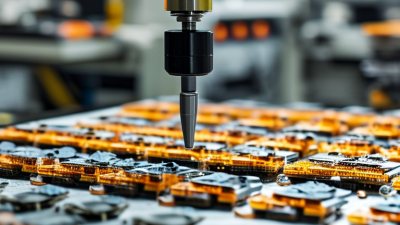
China Best Die Pick Up And Place Machine Suppliers?
Die pick up and place machines move semiconductor dies from wafers, trays, or tapes onto substrates. Their key features include high-resolution vision, controlled vacuum pickup, adjustable placement force, and programmable rotation. A stable machine should identify tiny die edges under changing lighting. It should also compensate for wafer distortion and substrate movement.
SEMI’s December 2024 forecast expects global semiconductor manufacturing equipment sales to reach about 113 billion dollars in 2024 and 121 billion dollars in 2025. This growth increases demand for precise die handling across advanced packaging lines. Applications include flip-chip assembly, stacked memory, power modules, LED packaging, and sensor production. For delicate dies, force control matters. Too much pressure can create invisible cracks.
Yole Group’s 2024 advanced-packaging analysis reports continued double-digit growth in several advanced packaging segments through the decade. That trend favors machines with flexible tooling, fast recipe changes, and closed-loop inspection. Practical buyers should examine placement accuracy, throughput, changeover time, and traceability data. A quoted accuracy figure may hide difficult operating conditions. Real factory trials are essential. Dust control, nozzle wear, and operator training also affect yield, yet these details are often underestimated.
| Evaluation Dimension | Typical Industry Data or Range | Why It Matters | Common Applications |
|---|---|---|---|
| Primary Function | Automated pick-up, orientation, transfer, and placement of semiconductor dies, substrates, or small electronic components. | Reduces manual handling and supports repeatable assembly processes. | Die attach, flip-chip assembly, LED packaging, sensor packaging, and hybrid microelectronics. |
| Component Size Capability | Often configured for dies from approximately 0.2 mm to more than 20 mm per side, depending on tooling and machine design. | The usable range determines whether one machine can support both miniature and larger semiconductor packages. | Micro-LED, MEMS, power semiconductors, optoelectronic devices, and integrated circuits. |
| Placement Accuracy | Typical systems provide approximately ±5 µm to ±25 µm placement accuracy; precision configurations may achieve tighter results under controlled conditions. | Accurate placement is essential for electrical connections, optical alignment, and die-attach quality. | Flip-chip bonding, optical modules, RF devices, and fine-pitch packages. |
| Placement Repeatability | Commonly specified within approximately ±3 µm to ±15 µm, depending on measurement method, substrate condition, and motion platform. | Stable repeatability helps maintain consistent product quality over long production runs. | High-volume semiconductor assembly and automated laboratory production. |
| Throughput | Usually rated from several hundred to several thousand placements per hour; actual output depends on die size, inspection, bonding, and handling steps. | Throughput affects production capacity and cost per assembled unit. | LED production, consumer electronics, semiconductor packaging, and automotive electronics. |
| Motion System | Typically uses motorized X-Y-Z axes with a rotary or theta axis; linear stages, servo motors, and closed-loop positioning are widely used. | Multi-axis motion enables controlled alignment, pickup height, rotation, and placement force. | Die sorting, die bonding, substrate assembly, and precision component transfer. |
| Vision Inspection | Common functions include die recognition, edge detection, orientation correction, fiducial alignment, and post-placement inspection. | Vision systems compensate for die position variation and help detect missing or misaligned components. | Wafer-to-substrate alignment, flip-chip placement, and quality control. |
| Pickup Method | Vacuum collets, ejector pins, expansion mechanisms, or specialized gripping tools may be used according to die structure and surface sensitivity. | The pickup method must prevent cracking, chipping, contamination, and damage to delicate surfaces. | Silicon dies, thin dies, LED chips, fragile sensors, and bare semiconductor components. |
| Placement Force Control | Force-controlled or programmable Z-axis placement is commonly used, with settings adapted to adhesive, substrate, and die requirements. | Controlled force improves adhesive spread and reduces die damage or substrate deformation. | Epoxy die attach, solder attach, pressure-sensitive bonding, and delicate optical assemblies. |
| Substrate Compatibility | May support leadframes, ceramic packages, printed circuit boards, wafers, carriers, panels, and custom fixtures. | Fixture flexibility helps manufacturers use the equipment across different package formats. | QFN, QFP, power modules, ceramic packages, LED boards, and sensor modules. |
| Wafer Handling | Systems may accept standard wafer formats such as 6-inch or 8-inch wafers, subject to the machine's wafer table and configuration. | Direct wafer handling can reduce intermediate transfer steps and improve die traceability. | Wafer-based die sorting, die attach, known-good-die placement, and semiconductor packaging. |
| Process Materials | Compatible processes may include epoxy, die-attach film, solder, sintered materials, or other application-specific bonding media. | Material compatibility influences heating, dispensing, placement force, and process stability. | Power electronics, automotive modules, optoelectronics, and conventional semiconductor packages. |
| Temperature Control | Optional heated stages, bonding heads, or curing zones are commonly used; operating temperatures depend on the bonding material and process recipe. | Stable temperature supports adhesive viscosity control, curing, soldering, and sintering processes. | Thermal die attach, solder reflow-related processes, and high-reliability packaging. |
| Automation and Integration | Typical integration options include wafer loaders, substrate loaders, conveyors, barcode or QR-code tracking, recipe management, and factory communication interfaces. | Automation reduces operator intervention and improves material traceability. | Smart factories, high-volume packaging lines, automotive electronics, and centralized production control. |
| Quality and Process Data | Useful records include placement coordinates, vision results, force data, alarm history, recipe revisions, and lot identification. | Process data supports statistical control, root-cause analysis, and compliance documentation. | Automotive, medical, aerospace, and other traceability-focused manufacturing environments. |
| Supplier Selection Criteria | Evaluate accuracy, repeatability, throughput, service support, spare parts availability, training, software capability, and compatibility with existing equipment. | A machine's total production value depends on reliability and support as well as its initial specifications. | New production lines, capacity expansion, process upgrades, and customized packaging projects. |
China Best Die Pick Up and Place Machine Suppliers?
How to Evaluate Chinese Die Pick Up and Place Machine Suppliers
China remains a major semiconductor equipment market. SEMI reported approximately 49.8 billion dollars in Chinese semiconductor equipment sales during 2024. This scale creates many die pick-up and place machine suppliers, but market size does not prove machine quality.
Evaluate suppliers through measurable production evidence. Request a live factory acceptance test using your actual die size, adhesive, substrate, and placement pattern. Check placement accuracy, repeatability, throughput, yield, and changeover time. Ask for inspection records, calibration certificates, software revision logs, and failure data. ISO 9001 certification supports process control, but it cannot replace technical verification. A supplier should explain feeder stability, vision performance, vacuum control, and ESD protection in practical terms.
Tips: Ask for a 72-hour continuous test. Record every stoppage. Review spare-part lead times and remote-support response times. Confirm site acceptance criteria before signing. SEMI’s 2024 equipment data shows strong regional demand, yet supplier comparisons still require independent testing. A polished demonstration can hide unstable production conditions. I would not trust one successful placement sample. Request repeated runs and keep the raw results. Even experienced buyers sometimes overlook software recovery after power loss. Test it deliberately. Inspect wiring, cleanliness, operator training, and maintenance access during a factory visit. These small details often reveal whether the supplier can support reliable production.
Choosing a die pick up and place machine supplier in China requires more than comparing catalog prices. Start with process fit. Confirm die dimensions, weight range, placement accuracy, cycle time, and compatible packaging formats. Ask for measured results from similar applications, not rounded claims. A reliable supplier should explain vision calibration, tooling changes, feeder stability, and error recovery in clear language. Request sample runs using your actual die types and adhesive conditions. Small details matter.
During evaluation, inspect machine structure, motion control, camera resolution, and software records. Ask how often calibration is required and who performs it. Check factory acceptance tests, installation procedures, spare-part availability, and remote support response times. Service quality often decides whether a line starts on schedule. Review electrical documentation and operator training materials before signing. Also examine quality controls for incoming components and final assembly. A supplier with traceable inspection records is easier to trust.
Total cost includes tooling, maintenance, utilities, training, and possible production pauses. The cheapest offer may hide expensive changeover work. I have seen teams focus on speed and underestimate cleaning access. That mistake can return every shift. Ask for a realistic acceptance standard, warranty boundaries, and upgrade paths. Compare evidence, not confidence. Leave room for review; early assumptions may change after sample testing.
A brand-neutral evaluation model for comparing die pick-up and placement machine suppliers. The weighting emphasizes placement quality, production efficiency, equipment reliability, and long-term support.
Use these percentages as a procurement scoring framework when reviewing supplier quotations, factory audits, technical specifications, warranty terms, spare-parts availability, and after-sales service.
China Best Die Pick Up And Place Machine Suppliers?
Ordering a die pick up and place machine requires more than comparing prices. SEMI’s December 2024 forecast valued global semiconductor equipment sales at about US$112.8 billion. This signals strong demand, but delivery pressure can hide weak engineering support. Request a written specification for placement accuracy, cycle time, die-size range, vision resolution, and acceptable defect limits. Ask for sample trials using your actual wafer, adhesive, and package design. A polished demo is not enough.
Quality control should be visible and repeatable. Check calibration records, incoming-part inspection, software version control, and final acceptance data. The ISO Survey 2022 recorded over 1.2 million ISO 9001 certificates worldwide, yet certification alone cannot prove machine performance. Require traceable test reports. Include uptime, placement yield, and mean time between failures in the acceptance document. I would also inspect cable routing and operator access. Small details often become expensive delays.
Tips: Use staged payments linked to factory acceptance, shipment, installation, and production approval. Keep spare sensors, nozzles, belts, and critical boards locally. Agree on response times, remote diagnostics, training hours, and escalation contacts before ordering. Ask for three customer references with similar die sizes. Do not rely only on translated manuals. A two-week support promise may sound useful, but it needs measurable service levels. Even experienced buyers sometimes underestimate software updates and changeover time. That deserves a second review.