How to Choose a Die Pick Up And Place Machine?
Choosing a Die Pick Up And Place machine is not a simple price comparison. It is a process decision that affects yield, cycle time, operator workload, and long-term production stability. A machine may look impressive during a short demonstration. The real test appears after thousands of placements, repeated substrate changes, and fragile die handling.
Industry data supports this concern. SEMI’s World Fab Forecast tracks more than 1,400 semiconductor facilities and production lines worldwide, reflecting the scale and diversity of modern manufacturing. Meanwhile, Yole Group’s Status of Advanced Packaging reports consistently highlight heterogeneous integration, chiplets, and advanced package structures as major technology directions. These trends demand tighter placement accuracy, cleaner handling, and greater flexibility. A machine designed for standard packages may struggle with thin dies, non-uniform surfaces, or adhesive variation.
This guide examines the practical factors behind a reliable purchase. It considers placement accuracy, throughput, vision capability, die size range, wafer compatibility, changeover time, and after-sales support. For example, a supplier may claim high speed, but that figure can exclude vision inspection, pickup verification, or alignment delays. That detail matters on a real production floor. I would not treat one impressive specification as proof of suitability. A better assessment uses sample dies, production materials, and repeatability data from several operating cycles. The final choice should fit your process today while leaving room for future package development. Sometimes, the most expensive machine is not the most capable one. Sometimes, the cheaper option quietly creates higher losses.
What Is a Die Pick Up and Place Machine?
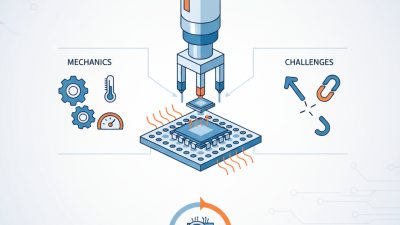
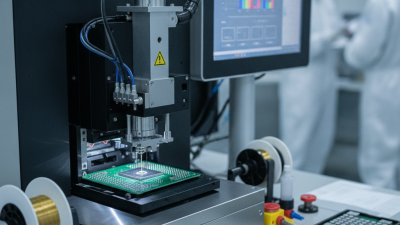
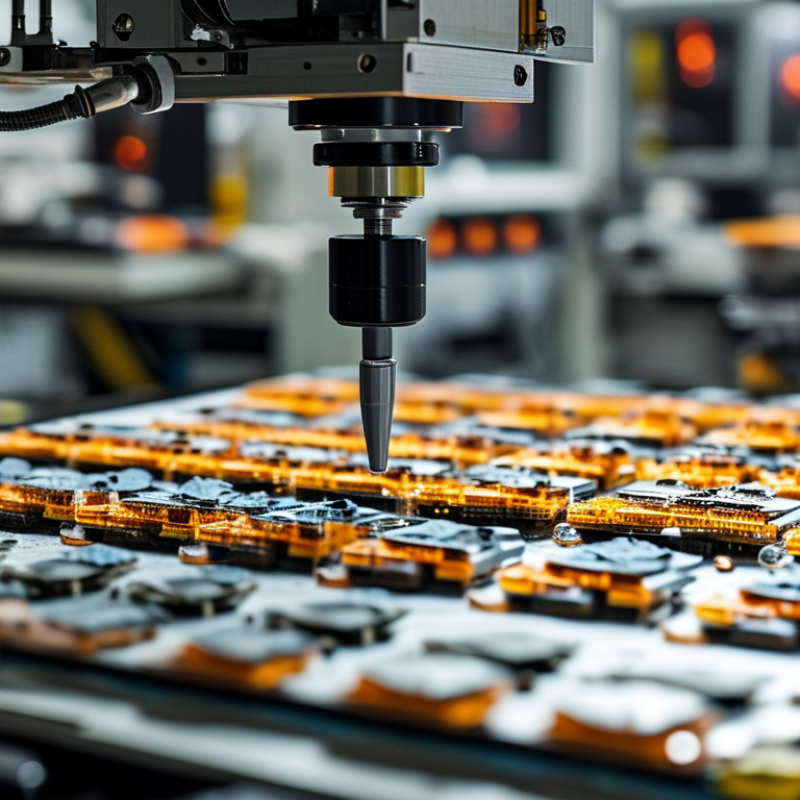
A die pick up and place machine is an automated system for moving tiny semiconductor dies. It removes each die from a wafer or carrier. Then, it places the die onto a substrate, lead frame, or bonding station. The process demands steady vacuum control, accurate vision, and gentle handling. A small placement error can affect electrical performance or later packaging steps.
The machine usually combines an ejector, pick-up tool, optical inspection unit, and motion platform. Vision software checks die position, rotation, surface defects, and missing components. Placement accuracy often reaches the micrometer range, depending on die size and package design. Speed matters too. However, higher speed can create vibration, dust, or alignment problems. That trade-off is easy to underestimate.
Industry demand supports closer attention to this equipment. SEMI’s 2024 World Fab Forecast projected global semiconductor manufacturing equipment spending of about 112.8 billion dollars in 2025. The WSTS Autumn 2024 Forecast estimated worldwide semiconductor sales at 627 billion dollars in 2024. These figures suggest continued pressure on factories to improve throughput and yield. Still, a larger equipment budget does not guarantee better production. In practice, engineers must test real wafers, adhesive conditions, die thicknesses, and rejection rates. A machine that performs well in a demonstration may behave differently after long shifts. That uncomfortable gap deserves careful review.
Which Production Requirements Should Guide Machine Selection?
How to Choose a Die Pick Up And Place Machine?
Which Production Requirements Should Guide Machine Selection?
Choosing a die pick up and place machine starts with production requirements, not a machine catalog. Define die size, thickness, material, weight, and placement tolerance. Record the real cycle time, including loading, alignment, inspection, and tool changes. A machine rated for peak speed may slow sharply when accuracy checks are added. That difference matters.
Monthly volume should guide the balance between speed, uptime, and maintenance access. For short runs, flexible tooling and quick changeover may matter more than maximum throughput. For continuous production, calculate hourly output from verified cycle data, not a brochure estimate. One uncomfortable lesson is that a perfect laboratory cycle rarely survives a busy shift. I have seen lines miss targets because operators needed too long to reset trays. Check tray capacity, feeder compatibility, gripper range, and software integration before approval. Small mismatches become daily delays.
Accuracy requirements deserve a physical test with representative dies and the actual substrate. Measure placement error across the full working area, not only at the center. Ask how the system reacts to warped parts, dust, empty pockets, and rejected units. These events expose weak recovery logic.
Safety guarding, operator ergonomics, spare-part availability, and service response also affect output. Do not ignore training time. A tempting selection can still be wrong if its capacity leaves no room for process variation.
How to Compare Machine Accuracy, Speed, and Handling Capacity
Choosing a die pick up and place machine requires more than reading its maximum speed. Accuracy, cycle time, and handling capacity must match your actual production conditions. A machine may claim excellent placement precision, yet perform differently with thin, warped, or slightly contaminated dies.
During equipment trials, measure placement repeatability across several hours. Check whether the machine maintains accuracy after continuous operation, not only during a short demonstration. Review vision alignment, motion stability, and gripper control. A practical target is consistent placement within your process tolerance. Tighter accuracy is not always better if it reduces speed or increases rejection risks.
Speed should be evaluated with real pickup and placement distances, tray changes, inspections, and pauses included. Ask for completed cycles per hour, rather than relying on theoretical motion speed. Handling capacity also matters. Confirm the supported die sizes, thickness range, tray formats, and weight limits. A larger capacity may seem useful, but oversized mechanisms can reduce responsiveness.
Tips: Test representative dies, including the most difficult shapes. Record accuracy, cycle time, mispicks, and stoppages. Leave room for future products. Capacity calculations are often too optimistic. A machine that handles today’s workload may struggle after product variety increases. Check maintenance access, software adjustments, and operator training before making a final decision. Small setup details can affect daily output more than impressive specifications.
How to read this comparison: These representative, non-branded benchmark values reflect common specification ranges for die pick-and-place equipment. Placement accuracy is shown as ± micrometres, where a lower value is better. Throughput indicates typical dies handled per hour, while maximum die size is used as a practical indicator of handling capacity. The best choice should balance accuracy, speed, die dimensions, substrate requirements, and process stability.