
Leave Your Message

China Top Bonding Wire and Ribbon Suppliers?

Choosing a supplier for Bonding Wire and Ribbon requires more than comparing a price list. Buyers need to assess material consistency, bondability, delivery reliability, and technical support. These details matter on the production floor, where a small change in wire diameter or surface condition can affect bonding stability and yield.

SEMI’s 2024 materials market report recorded global semiconductor materials revenue of approximately $66.7 billion in 2023. Its packaging materials segment accounted for about $23.1 billion. These figures describe a broad market, not bonding wire alone, but they show the scale and competitiveness of semiconductor packaging supply. They also offer useful context when reviewing manufacturers serving advanced packaging and established wire-bonding applications.

A supplier comparison should consider copper, gold, and silver-alloy options, as well as ribbon formats where the application requires them. Ask for product specifications, quality-system details, sample evaluation support, and evidence of consistent lot-to-lot performance. Check whether the supplier can support your equipment, package design, and production volumes. A polished catalogue is not enough. Real process trials matter.

The companies discussed under “China Top Bonding Wire and Ribbon Suppliers” should therefore be judged by verifiable capabilities, not broad marketing claims. Public information can be incomplete, and supplier rankings may change with capacity, product mix, or customer requirements. That comparison is imperfect. It is still a practical starting point for procurement teams seeking a dependable partner.

China Top Bonding Wire and Ribbon Suppliers?

Understanding Bonding Wire and Ribbon and Their Role in Electronics

Bonding wire and ribbon are small conductors that create electrical connections inside semiconductor packages. They link a chip’s contact pads to package leads, helping signals and power move between the two. The parts are tiny, but their geometry matters. A fine wire forms a narrow loop; a ribbon is flatter and wider, offering a different contact area and current path.

Material, diameter, surface condition, and bond shape all affect performance. In production, technicians may inspect loop height under magnification and test bonds for strength. A weak bond can interrupt a signal, while excessive force may damage a delicate pad. There is no universal choice. Package layout, operating conditions, and assembly process guide the selection. Small details count.

Ribbon can suit designs that need a broad, low-profile connection, while round wire often fits tighter layouts. That sounds simple, but the real trade-offs are less tidy. Thermal cycling, vibration, and manufacturing variation can change how a connection behaves over time. Engineers therefore validate materials and bonding settings on representative assemblies, not just on paper. Even careful testing leaves uncertainty, so process monitoring remains important.
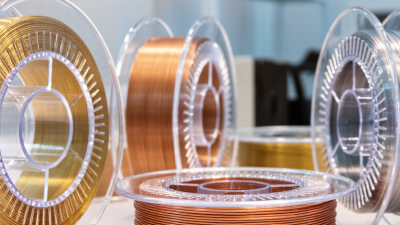

Key Materials and Specifications Used in Bonding Wire and Ribbon

Bonding wire and ribbon choices begin with the base metal. Gold offers stable bonding and corrosion resistance, but its cost can be substantial. Copper conducts well and supports fine-pitch connections, though it typically demands tighter control of bonding force and surface condition. Aluminum is common in power applications, while aluminum ribbon provides a wider contact area for high-current paths. Silver alloys may suit particular designs, but compatibility must be verified.

Small details matter. Wire specifications usually include diameter, tensile strength, elongation, and electrical resistivity. A diameter of 20 to 30 micrometers is common in fine-wire applications, though the correct value depends on pad geometry and current needs. Ribbon is specified by width and thickness, as well as alloy and temper. Clean surfaces help prevent inconsistent bonds; even minor contamination can cause weak interfaces. Ask suppliers for material certificates and batch-level test data, not just a catalog range. Then review bond performance on the actual substrate and equipment. Lab results may not transfer neatly to production. That part is easy to overlook. A specification can look excellent on paper and still need adjustment at the bonding machine.

}, }, }, }, },
China Top Bonding Wire and Ribbon Suppliers? - Key Materials and Specifications Used in Bonding Wire and Ribbon
Material Type Typical Product Form Common Diameter or Thickness Range Key Material Characteristics Typical Bonding Applications Important Specifications and Quality Factors
Gold (Au) Round wire; fine wire Approximately 15–50 μm diameter Excellent corrosion resistance, high ductility, stable electrical conductivity, and good ultrasonic bondability. Fine-pitch integrated circuits, sensors, optoelectronic packages, and applications requiring high chemical stability. Wire diameter tolerance, tensile strength, elongation, loop profile, ball formation consistency, and bond pull strength.
Copper (Cu) Round wire; coated copper wire Approximately 12–50 μm diameter High electrical and thermal conductivity, lower material cost than gold, and relatively high mechanical strength. Power semiconductors, discrete devices, automotive electronics, and high-current integrated circuit packages. Surface oxidation control, bonding force, ultrasonic power, free-air-ball formation, hardness, and pad damage prevention.
Palladium-Coated Copper (PCC) Round wire with a palladium surface layer Approximately 15–50 μm diameter Copper core conductivity combined with improved oxidation resistance and enhanced storage stability. Fine-pitch semiconductor packages, memory devices, and applications requiring improved copper wire reliability. Coating uniformity, palladium coverage, intermetallic compound growth, bond strength, and wire break performance.
Silver (Ag) Round wire; silver alloy wire Approximately 15–50 μm diameter Very high electrical and thermal conductivity with good reflectivity; alloying may improve strength and corrosion resistance. LED packages, power electronics, RF components, and selected high-conductivity interconnect applications. Alloy composition, tarnish resistance, surface cleanliness, bondability, thermal aging, and electrical resistance.
Aluminum (Al) Round wire; heavy wire; ribbon Fine wire: approximately 18–50 μm; heavy wire: approximately 75–500 μm Low density, good conductivity, and strong compatibility with aluminum metallization; forms a stable oxide layer. Power modules, LED devices, automotive power electronics, and large-area die-to-lead-frame connections. Oxide control, wedge-bond parameters, ribbon width and thickness, heel strength, bond-foot geometry, and thermal-cycle reliability.
Aluminum-Silicon Alloy Round wire; heavy wire; ribbon Commonly used in heavy-wire diameters from approximately 100–500 μm Improved mechanical strength and reduced sensitivity to certain bonding and thermal-fatigue conditions compared with pure aluminum. Power semiconductor modules, industrial power devices, and high-current interconnections. Silicon content, tensile strength, elongation, bond interface quality, resistance to wire lift, and thermal cycling performance.
Aluminum-Magnesium Alloy Heavy wire; ribbon Commonly used in heavy-wire and ribbon bonding Enhanced mechanical strength and improved resistance to deformation in demanding power-device assemblies. Power modules, inverter assemblies, electric-vehicle electronics, and high-temperature applications. Alloy uniformity, surface oxide condition, wedge-bond stability, current-carrying capacity, and vibration resistance.
Copper Ribbon Flat ribbon Typical thickness approximately 50–300 μm; width approximately 0.5–3.0 mm High current-carrying capacity, low electrical resistance, and efficient heat conduction compared with fine round wire. Power modules, battery systems, automotive electronics, and high-current die or terminal connections. Ribbon width-to-thickness ratio, edge quality, flatness, surface oxidation, wedge-bond compatibility, and current-density capability.
Aluminum Ribbon Flat ribbon Typical thickness approximately 50–300 μm; width approximately 0.5–5.0 mm Lightweight, conductive, and suitable for wide bonded areas and high-current connections. Power semiconductor modules, LED packages, automotive electronics, and battery-related assemblies. Ribbon dimensions, tensile strength, elongation, oxide control, bond footprint, loop geometry, and power-cycling reliability.
Bonding Wire with Insulating or Protective Coating Coated round wire Base wire commonly approximately 15–50 μm diameter Provides electrical insulation or improved handling characteristics where controlled separation between adjacent wires is required. Specialized sensors, compact electronic modules, crossed-wire structures, and selected high-density assemblies. Coating thickness, stripping behavior, insulation resistance, thermal stability, bond-area cleanliness, and compatibility with bonding equipment.

How to Assess Bonding Wire and Ribbon Suppliers in China

China Top Bonding Wire and Ribbon Suppliers?

Assessing bonding wire and ribbon suppliers in China requires more than comparing price lists. Ask for alloy composition, wire diameter tolerance, ribbon width, tensile strength, and elongation data. Reliable suppliers should provide batch numbers and traceability records. A clear certificate matters. However, paperwork alone can mislead.

Request samples from the same production line used for regular orders. Test them on your bonding equipment, not only in a supplier’s laboratory. Check loop height, bond strength, ultrasonic response, and surface cleanliness. Examine the spool under magnification for scratches, uneven winding, or oxidation. Small defects may become major yield problems.

Visit the factory when possible, or arrange a live video audit. Observe material storage, humidity control, cleaning procedures, and final inspection. Ask how rejected batches are separated and reported. Experienced suppliers will discuss failure cases without hiding every weakness. That honesty is valuable, although it does not guarantee perfect performance. I would also compare lead times, packaging protection, technical support, and response speed after delivery. A supplier may offer excellent samples but struggle during volume production. Run a controlled trial order before approving long-term supply, and record every test result for a fair comparison.

Leading Bonding Wire and Ribbon Suppliers in China

China’s bonding wire and ribbon suppliers serve assembly lines where consistency matters more than a polished catalogue. Buyers typically compare wire diameter, tensile strength, bondability, and lot-to-lot variation. For ribbon, width and thickness control can affect bond placement and current handling. Ask suppliers for recent inspection records and sample reels. Small details matter.

SEMI reported that global semiconductor materials sales reached US$67.5 billion in 2023, including US$25.1 billion in packaging materials. This figure reflects the wider materials supply chain, not bonding wire alone. Still, it shows the scale of demand surrounding packaging operations. In China, supplier evaluations should include alloy traceability, drawing-process controls, packaging cleanliness, and technical response times. A low quoted price means little if operators must adjust bonding parameters repeatedly.

A practical audit can start with a sample lot and a documented trial on the buyer’s equipment. Check spool winding, surface condition, and bond results across multiple positions. Request clear specifications for gold, copper, silver, or palladium-coated copper products, where relevant. Then review change-control procedures and delivery consistency. Some supplier claims may sound reassuring; verify them with data. The comparison is rarely perfect.

Supplier Selection Factors for Different Manufacturing Needs

China Top Bonding Wire and Ribbon Suppliers?

Supplier Selection Factors for Different Manufacturing Needs

Choosing a bonding wire or ribbon supplier requires more than comparing prices. The correct material depends on package design, bonding equipment, production volume, and reliability targets. A supplier should provide clear data on diameter tolerance, tensile strength, elongation, surface condition, and electrical resistance. Small variations can cause unstable loops or weak bonds.

Match the material to the application. Fine wire may suit compact semiconductor packages and delicate bonding paths. Wider ribbon can improve current handling in power modules and battery-related assemblies. Ask for samples using your actual capillary, wedge tool, and bonding settings. Laboratory results alone are not enough. Production trials reveal feeding issues, broken wires, and inconsistent bonding behavior.

Quality systems also deserve close attention. Review lot traceability, inspection records, packaging protection, and response procedures for nonconforming material. A reliable supplier should explain how it controls drawing, annealing, cleaning, and final inspection. Check whether technical staff can support process adjustments across different equipment. Communication speed matters during a line stoppage.

Do not choose on price alone.

Lead time, minimum order quantity, and storage guidance can affect total cost. Some evaluations overemphasize certificates and overlook operator feedback. That is a mistake worth reconsidering. A stronger decision combines documented quality, measured trial results, stable delivery, and practical engineering support. Supplier performance should be reviewed again after several production lots.

Material Selection Factors for Bonding Wire and Ribbon

Electrical resistivity of commonly used bonding materials at approximately 20°C

Lower resistivity generally supports lower electrical losses in power and high-current semiconductor packages. Copper and silver offer the lowest resistivity, while aluminum provides a lightweight and cost-effective option. Gold is valued for its corrosion resistance and established fine-wire bonding performance. Final supplier selection should also consider wire or ribbon dimensions, bondability, reliability requirements, and manufacturing equipment compatibility.