China has become a critical sourcing base for semiconductor assembly materials, including Heraeus Bonding Wire. Global buyers now need more than low quotations. They need verified origin, stable metallurgy, and dependable delivery. SEMI reported that global semiconductor materials sales reached approximately US$67.1 billion in 2023. That figure reflects the scale of a demanding supply chain. WSTS also projected strong semiconductor market growth for 2024, increasing pressure on packaging suppliers and material distributors.
This guide examines leading China-based suppliers and sourcing channels for Heraeus Bonding Wire. It focuses on product authenticity, alloy selection, wire diameter, spool condition, and technical support. Typical evaluation points include 18–25 μm fine wire, gold, copper, and silver alloy options, plus batch traceability. A reliable supplier should provide certificates of analysis, lot numbers, storage guidance, and clear manufacturer authorization. Physical details matter. A properly sealed spool should show readable labeling, intact packaging, and no oxidation or handling marks.
Performance comes first. Not only price.
Yole Group’s advanced packaging research highlights rising demand for higher-density interconnects and improved assembly reliability. This trend makes bonding wire quality increasingly important for power devices, sensors, automotive electronics, and consumer chips. However, supplier rankings are never permanent. Capacity, lead times, and authorization status can change quickly. Buyers should confirm current documentation directly with each supplier. A polished website is not enough. Practical testing, sample approval, and factory communication remain essential. That is where this comparison aims to be useful, although no shortlist can replace independent qualification.
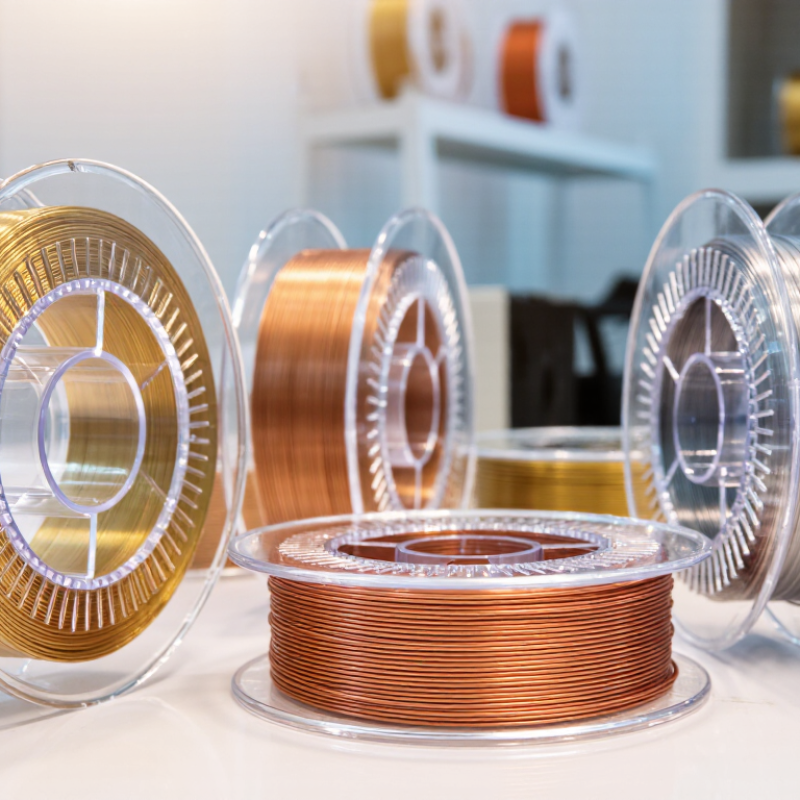
Bonding wire is a fine metal wire used to connect a semiconductor chip with its package leads. It carries electrical signals and power through tiny looped connections. Common materials include gold, silver, copper, and aluminum. Each option affects conductivity, strength, cost, and bonding temperature. Wire diameter may be thinner than a human hair, so handling requires controlled equipment and clean production areas.
Global buyers choose high-quality bonding wire for its stable performance across large production runs. Consistent diameter supports predictable loop height and bonding force. Reliable wire also reduces issues such as broken bonds, lifted pads, and uneven heel shapes. These details matter in automotive modules, power devices, sensors, and consumer electronics. Small defects can become expensive failures later.
No wire suits every package. A material that works well for a low-power chip may perform poorly in a high-current application. Buyers should check bond-pad materials, operating temperature, storage conditions, and machine compatibility before ordering. A polished datasheet is not enough. Trial bonding still matters. In practice, engineers may need to adjust ultrasonic energy, clamping force, or loop settings. This process can reveal weaknesses that laboratory data misses. Supplier traceability, batch records, and technical support also influence purchasing decisions. Reliability is built through repeatable results, not attractive claims.
| Bonding Wire Material | Electrical Conductivity at 20°C | Density | Melting Point | Common Wire Diameter Range | Typical Bonding Process | Common Semiconductor Applications | Key Buyer Considerations |
|---|---|---|---|---|---|---|---|
| Gold (Au) | Approximately 44.2 MS/m | 19.32 g/cm³ | 1,064.2°C | 15–50 μm for fine-wire applications | Ball bonding and wedge bonding | LED packages, sensors, RF devices, memory and integrated circuits | Excellent corrosion resistance, stable bond formation and good storage reliability |
| Copper (Cu) | Approximately 58.0 MS/m | 8.96 g/cm³ | 1,084.6°C | 15–50 μm for fine-wire applications | Ball bonding and wedge bonding | Power semiconductors, discrete devices, automotive electronics and high-current packages | High electrical and thermal conductivity; often requires controlled bonding parameters and suitable protection against oxidation |
| Silver (Ag) | Approximately 62.1 MS/m | 10.49 g/cm³ | 961.8°C | 15–50 μm for fine-wire applications | Ball bonding and wedge bonding | LEDs, sensors, RF components and selected power electronics | Very high conductivity; buyers should evaluate tarnish resistance, bond consistency and package compatibility |
| Aluminum (Al) | Approximately 37.7 MS/m | 2.70 g/cm³ | 660.3°C | 100–500 μm for heavy-wire applications | Wedge bonding | Power modules, automotive inverters, industrial controls and high-current assemblies | Low density and suitable for heavy-current connections; oxide control and bond-surface preparation are important |
| Gold-Plated or Alloyed Wire | Depends on the base metal and alloy design | Depends on material composition | Depends on material composition | Usually specified by the package design and bonding equipment | Ball bonding or wedge bonding | Cost-sensitive consumer electronics, LEDs and selected sensor packages | Request complete alloy composition, plating thickness, surface condition, bondability data and lot traceability before approval |
Technical values are commonly referenced material properties at approximately 20°C. Diameter ranges are general industry-use ranges rather than product-specific guarantees. Global buyers should confirm the final specification, tolerance, spool format, bond strength, loop profile, surface condition, packaging, compliance documents and lot traceability with the selected supplier.

Selecting reliable bonding wire suppliers in China requires more than comparing prices. Global buyers should examine wire diameter, material purity, tensile strength, elongation, and surface consistency. Common diameters range from 15 to 50 micrometers, depending on package design and bonding equipment.
Copper Wire Copper wire offers strong conductivity and lower material cost.
Gold Wire Gold wire usually provides stable bonding and corrosion resistance.
Silver Alloy Wire Silver alloy wire can balance conductivity and process flexibility.
Performance depends on more than the spool label. Ask for bond pull, ball shear, loop height, and stitch strength data from recent production lots. A stable free-air ball shape reduces bonding defects. Consistent wire tension also helps prevent loops from leaning during high-speed assembly.
Suppliers should provide batch traceability, storage guidance, inspection records, and clear packaging details. In practice, these documents reveal production discipline. Still, paperwork alone is not proof. A sample may perform well, while later lots need closer control.
Tips: Test samples on your actual capillary, bonding force, temperature, and cycle settings. Check spool winding under magnification. Request reliability results after humidity, thermal cycling, and high-temperature storage. Leave room for review. Even experienced engineers can overlook equipment differences, operator habits, or small contamination risks. A short pilot run often exposes issues before full-volume purchasing begins.
Reliable bonding wire sourcing starts with technical verification, not attractive quotations. Ask Chinese suppliers for wire diameter tolerance, alloy composition, tensile strength, elongation, and surface finish data. Request recent batch certificates, not generic brochures. A capable factory should explain its testing methods and equipment. Inspect storage areas, sealed packaging, and lot identification. Small details matter.
Request samples from two or three production lots. Test them on your own bonding machine when possible. Check loop height, bond pull strength, ball formation, and stitch consistency. Record results at different speeds and temperatures. A supplier that welcomes controlled trials usually understands process risk. Ask about capacity, lead time, emergency handling, and traceability. A remote factory tour helps, but it cannot replace an audit. Speak with the engineering team, not only the sales contact.
Review quality-system records, process controls, inspection reports, and export experience. Confirm whether each shipment includes clear specifications and test results. Ask for customer references from comparable semiconductor or electronics applications. Protect your evaluation with a written sample agreement and defined acceptance criteria. In my sourcing experience, fast replies do not always mean reliable production. A low quotation once looked efficient to me, but that assumption was weak. Suppliers should explain deviations honestly, even when the answer is uncomfortable. Their response to a failed sample often reveals more than a polished presentation.
Common semiconductor bonding-wire diameters used as a practical specification benchmark when evaluating Heraeus-compatible supply options.
Global buyers can use nominal wire diameter as an initial screening point, then verify alloy composition, bondability, spool configuration, lot traceability, certificates, sample results, and production consistency with each supplier. The diameter ranges shown are commonly used in semiconductor and microelectronic packaging applications; the correct selection depends on package design and bonding equipment.
Selecting Chinese bonding wire suppliers requires more than comparing quotations. Quality should be checked through wire diameter control, tensile strength, elongation, and bond performance. Ask for recent inspection reports, not only sample results. Experienced buyers often test wires on actual assembly equipment, because laboratory performance may differ during high-speed production. Small variations matter.
Certification supports reliability, but paperwork alone is not enough. Verify whether quality systems, environmental controls, and material declarations are current and traceable. A dependable supplier should provide batch numbers, production records, and corrective-action reports. Capacity also needs careful review. Request monthly output, equipment lists, shift arrangements, and contingency plans. A factory may claim large capacity, yet struggle with urgent orders. This happens.
Tips: Request samples from different batches. Audit packaging, storage, and moisture protection. Confirm lead times in writing. Evaluate technical responses, not just sales promises. Service should include engineering support, fast complaint handling, and clear communication across time zones. Ask how the supplier manages diameter changes, surface defects, and bonding instability. One practical mistake is focusing only on unit price. Lower pricing can hide higher inspection costs or inconsistent yields. A better evaluation combines measurable quality, verified certification, realistic capacity, and responsive support. Leave room for doubt, and keep testing.
Choosing a reliable Chinese bonding wire supplier requires more than comparing the lowest quotation.
Request prices by material, diameter, spool length, and order volume. A copper wire quote may exclude plating, testing, tooling, or export packaging. Ask for a complete cost sheet before making assumptions.
Customization should be measured through practical evidence.
Confirm wire diameter tolerance, tensile strength, elongation, spool dimensions, and bonding performance. Request samples from the same production line used for mass orders. A supplier should explain process controls and provide inspection records.
My earlier mistake was accepting a sample without checking lot consistency. That small oversight delayed production.
Logistics can change the real purchase price.
Compare sea, air, and courier options using the same delivery terms. Check carton protection, moisture control, insurance, customs documents, and tracking procedures.
Export support matters when commercial invoices or certificates contain errors. Ask who handles document corrections and how quickly they respond. A dependable supplier should provide clear lead times, production updates, and a named contact.
Cheap freight is not always efficient. One missing document can hold a small shipment for days.