Leave Your Message

How to Choose a K&S Wire Bonder for Global Buyers?

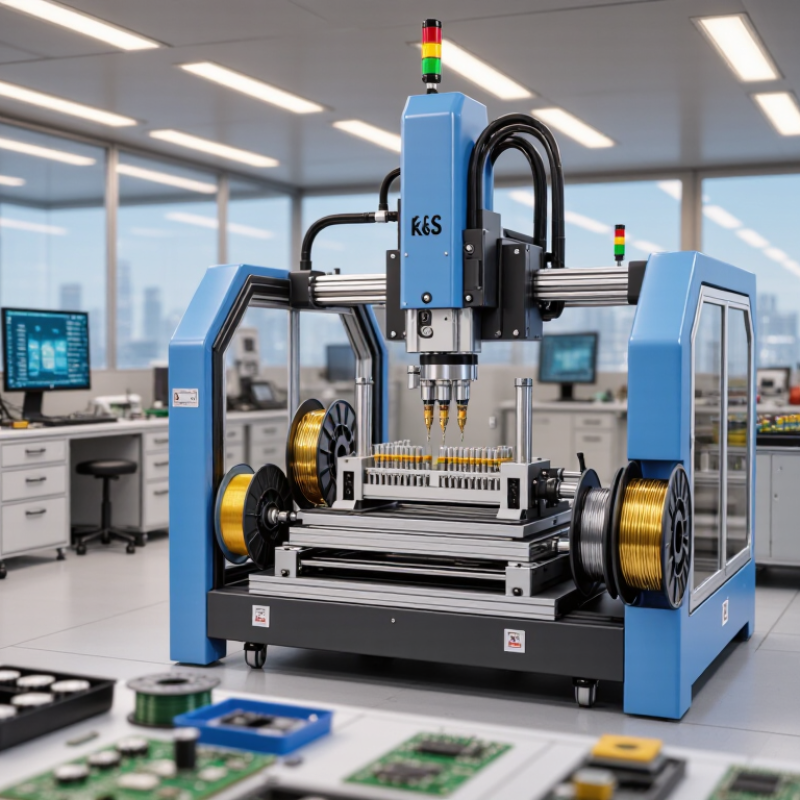
Choosing a K&S Wire Bonder is a technical purchasing decision, not a simple equipment comparison. Global buyers must match the bonder with package design, wire material, bond pitch, production volume, and operator capability. A machine that performs well on 100-micrometer aluminum wire may not suit fine-pitch gold or copper applications. Small differences matter.

The evaluation should begin with verified production requirements. Check supported wire diameters, bond force control, capillary compatibility, vision accuracy, programmable loop profiles, and expected cycle time. Ask suppliers for application data, sample-bond results, maintenance records, and training details. For used equipment, inspect ultrasonic performance, workholder condition, motion repeatability, software status, and spare-parts availability. Photos are not enough. A live demonstration is more reliable.

Global procurement also requires attention to installation and long-term support. Confirm electrical specifications, factory acceptance procedures, warranty terms, export documentation, operator training, and response times for technical service. Regional support can reduce costly downtime, especially when a production line operates across different time zones. Compliance documentation should be reviewed against the buyer’s local import, workplace safety, and environmental requirements. Never assume that one certificate covers every market.

Price alone can mislead. A lower purchase cost may hide obsolete software, limited upgrades, or difficult calibration. Conversely, the newest configuration may exceed the real production need. Careful buyers compare total ownership cost, yield stability, training needs, and future package plans. No selection guide removes every uncertainty. Yet a structured review of the K&S Wire Bonder can turn a risky purchase into a defensible engineering decision. Mistakes still happen, but measurable evidence makes them easier to identify and correct.

How to Choose a K&S Wire Bonder for Global Buyers?

Define the Role of a K&S Wire Bonder in Semiconductor Packaging

A wire bonder connects semiconductor chips to package leads through extremely fine metal wires. It creates electrical paths between the silicon die and the outside circuit. The process usually involves bonding, looping, and cutting each wire with controlled force. These actions happen within micrometers.

In daily production, the bonder must handle fragile chips without damaging pads. Operators inspect bond shape, loop height, pull strength, and placement accuracy. Stable ultrasonic energy matters when aluminum or copper wire is used. Temperature control also affects bonding consistency. A small shift can create weak connections. That risk is easy to underestimate.

Global buyers should examine the machine’s role in their packaging line, not only its speed. Check supported wire diameters, package sizes, automation options, software access, and maintenance requirements. Local training and spare-part availability can reduce unexpected downtime. Ask for real production data, not only laboratory results. A machine may look excellent on paper and still struggle with dusty floors or frequent product changes. I have found that operator feedback often reveals limitations hidden in technical brochures. It is not always perfectly measurable. Yet it deserves attention.

Reliability also depends on process control. Buyers should review calibration records, inspection methods, and service response times. Clear documentation supports repeatable production across different facilities. Trial bonding with actual package materials can expose problems early. That step takes time. It is usually worth it.

Compare K&S Wire Bonder Types and Bonding Technologies

How to Choose a K&S Wire Bonder for Global Buyers?

Comparing wire bonder types starts with the package, wire, and production target. Fine-wire ball bonders suit high-volume semiconductor packages and compact connections. They commonly use thermosonic energy, combining heat, pressure, and ultrasonic vibration. Wedge bonders provide accurate placement for power devices, sensors, and unusual package layouts. They often work with aluminum wire and ultrasonic bonding.

Heavy-wire bonders handle thicker wire and higher current requirements. Ribbon bonders can create broad connections, improving heat and electrical performance in some applications. However, wider bonding tools may need more clearance around the die. Machine speed matters, but stable bonding is more valuable than impressive cycle claims. Inspect sample bonds under magnification. Check loop shape, heel strength, bond width, and pull-test results. Small variations can reveal larger process problems.

Tips: Match the bonder with actual wire diameter, pad material, bond pitch, and package height. Ask for trials using your own materials. Review training, spare-part access, software support, and regional service coverage. A used machine may reduce initial cost, yet hidden calibration work can change the calculation. Do not rely only on brochures. Operator feedback is essential. Even experienced teams can overlook substrate warpage or contamination. No machine is perfect. Allow time for process tuning, because a technically suitable bonder may still perform poorly in an unstable production environment.

How to Choose a K&S Wire Bonder for Global Buyers? - Compare K&S Wire Bonder Types and Bonding Technologies

Bonder / Process Type Typical Wire or Ribbon Primary Bonding Technology Common Diameter or Thickness Range Best-Fit Applications Main Advantages Key Selection Considerations
Fine-Wire Ball Bonder Gold, copper, or palladium-coated copper wire Thermosonic ball bonding using ultrasonic energy, bonding force, and heat Approximately 15–50 µm, depending on configuration and material Integrated circuits, memory devices, sensors, LEDs, and compact semiconductor packages High placement accuracy; supports fine pitch and high-density interconnects; widely used for production packaging Check pad metallization, wire material compatibility, free-air-ball control, loop profile, and copper-wire process capability
Fine-Wire Wedge Bonder Aluminum, gold, or copper wire Ultrasonic wedge-to-wedge bonding, normally with controlled bonding force Approximately 15–75 µm Power devices, hybrid circuits, sensors, ceramic packages, and applications requiring directional wire placement Good control of wire direction and loop geometry; suitable for non-ball-bondable surfaces and certain difficult metallizations Evaluate bond-pad layout, wedge access, wire-feed direction, ultrasonic frequency, and required cycle time
Heavy-Wire Wedge Bonder Aluminum or copper wire High-power ultrasonic wedge bonding, often with heated workholding Approximately 100–500 µm; some systems support larger sizes Power modules, automotive electronics, industrial controls, battery systems, and high-current assemblies Low electrical resistance; high current-carrying capability; suitable for robust power interconnects Confirm maximum wire size, bonding force, ultrasonic power, clamping requirements, substrate strength, and thermal management
Ribbon Bonder Aluminum, copper, or gold ribbon Ultrasonic wedge bonding with a ribbon tool Commonly about 0.2–2.0 mm wide and 25–100 µm thick High-current power modules, automotive inverters, battery connections, and wide-pad semiconductor packages Large bonded area; low loop height; efficient current distribution; can reduce the number of parallel connections Review ribbon width and thickness, pad dimensions, tool access, ribbon feeding, loop requirements, and package clearance
Ball-Stitch-on-Ball Process Fine gold, copper, or coated copper wire A second ball bond is placed over an existing ball bond to create a compact vertical connection Typically within the fine-wire range of approximately 15–50 µm Stacked-die packages, package-on-package structures, and layouts with limited horizontal pad space Improves routing flexibility; supports compact package designs and selected stacked interconnect structures Requires stable ball formation, accurate placement, compatible pad metallurgy, and thorough shear and pull testing
Copper-Wire Bonding Configuration Bare copper or palladium-coated copper wire Thermosonic ball bonding or ultrasonic wedge bonding with controlled atmosphere and process parameters Approximately 15–500 µm, depending on ball, wedge, or heavy-wire use Cost-sensitive semiconductor packages, power devices, automotive electronics, and high-volume production Lower material cost than gold in many markets; good electrical and thermal conductivity; suitable for high-volume manufacturing Assess oxidation control, bonding temperature, pad damage risk, capillary or wedge life, molding compatibility, and qualification requirements
Gold-Wire Bonding Configuration Gold wire Thermosonic ball bonding or ultrasonic wedge bonding Approximately 15–75 µm for common fine-wire applications Hermetic packages, sensors, optoelectronics, legacy semiconductor lines, and applications requiring established gold-wire processes Excellent corrosion resistance; mature process window; generally easier atmospheric handling than bare copper Consider material cost, required electrical performance, pad finish, wire availability, and compatibility with existing qualification data
Manual or Semi-Automatic Bonder Fine wire, heavy wire, or ribbon depending on tool setup Operator-assisted ball, wedge, or ribbon bonding Determined by the installed bonding head and tooling Engineering development, laboratories, failure analysis, prototypes, low-volume production, and process qualification Lower initial investment; flexible changeover; useful for experiments and small batches Expect lower throughput and higher operator dependence; verify training, repeatability, data logging, and service availability
Fully Automatic Production Bonder Fine wire, heavy wire, or ribbon according to the selected platform Computer-controlled bonding with pattern recognition, programmable motion, and process monitoring Depends on the bonding head, tooling, and material package Medium- to high-volume semiconductor, automotive, power electronics, and contract manufacturing lines High repeatability; reduced manual handling; improved traceability; supports standardized production recipes Compare indexing time, UPH targets, vision capability, recipe management, factory interfaces, preventive maintenance, and local technical support

Note: Wire sizes, bonding force, ultrasonic power, cycle time, and supported materials vary by machine configuration, tooling, package design, and process qualification. Confirm final specifications through application testing before purchase.

Evaluate Key Specifications for Different Production Requirements

Choosing a wire bonder starts with production requirements, not the machine’s brochure speed.

SEMI’s 2024 World Fab Forecast projects global fab capacity to exceed 30 million 200mm-equivalent wafers monthly. That expansion increases demand for stable, repeatable bonding across diverse packages.

For fine-wire applications, evaluate wire diameter range, bond-force control, loop-height accuracy, and vision resolution. Small variations can create lifted bonds or inconsistent loops.

For power modules, heavy-wire capability, higher bonding force, tool life, and thermal stability matter more.

Confirm whether the platform supports aluminum, copper, or coated wire, because each material changes bonding behavior and process windows. Cycle time should include indexing, inspection, and recipe changes. A quoted UPH figure can look impressive but may not reflect real factory conditions.

Reliability data deserves equal attention.

Use pull-test and shear-test procedures aligned with JEDEC JESD22-B116 and related qualification practices. Ask for capability data, not only average results.

A practical target is a process capability index above 1.33 for critical bond parameters, although product risk may require more.

Check placement repeatability, alarm recovery, software traceability, spare-part availability, and local service response. Global sourcing often exposes hidden downtime costs.

I once underestimated changeover time. It damaged the production estimate.

Build a sample run using your actual leadframe, wire, die, and operator workflow before purchasing.

Assess Supplier Quality, Service, Compliance, and Global Support

Choosing a wire bonder for global production requires more than comparing speed and price. Supplier quality should be visible in process records, calibration reports, and factory acceptance tests. Ask for bond-strength data using materials similar to yours. Inspect sample wires under magnification. Small variations can become costly failures.

Service quality matters after installation. Confirm response times, spare-parts availability, and technician coverage in your region. A reliable supplier should provide installation training, preventive-maintenance schedules, and clear troubleshooting procedures. Remote support is useful, but it cannot replace skilled local assistance. Check whether software updates remain compatible with your production system. Do not trust promises without written service terms.

Tips: Request customer references from comparable factories. Review compliance documents for your destination market, including electrical safety and export requirements. Confirm serial-number traceability, warranty limits, and operator training records. Ask for a realistic delivery timeline, not an ideal one. Also, test communication across time zones before signing. A polished presentation is not proof of capability. In practice, even strong suppliers may miss a detail, such as connector standards or regional voltage. Leave room for verification.

Calculate Total Ownership Cost Before Making the Purchase

When choosing a wire bonder for global production, the purchase price is only the opening figure. A lower-cost machine may require expensive tooling, longer operator training, or frequent service visits. Build a five-year total ownership cost model before requesting approval. Include the machine, shipping, insurance, installation, calibration, taxes, and local technical support. Currency changes can also affect the real budget.

Track production details, not just equipment specifications. Estimate wire consumption, replacement capillaries, clamps, spare boards, compressed air, electricity, and software fees. Then calculate expected output per hour and acceptable bond yield. A machine that saves three seconds per unit may create greater value than one with a lower invoice price. Measure downtime carefully. One missed production shift can cost more than several routine maintenance visits.

Our first estimate was wrong. We ignored training time and emergency freight for a critical spare part. That mistake changed the preferred supplier. Ask for service response times, parts availability, warranty limits, and preventive maintenance intervals in writing. Request a sample run using your actual materials and package designs. Record bond strength, cycle time, operator adjustments, and rejected units. Keep some budget for uncertainty. Real factories rarely perform exactly like demonstrations.