How to Choose the Best Wire Bonding Machine for Your Needs?
When it comes to selecting a Wire Bonding Machine, expertise is critical. Dr. Emily Chen, a renowned engineer in semiconductor technology, emphasizes, “The right machine can significantly impact production efficiency.” Choosing the best machine requires understanding your specific needs and the various technologies available.
Wire bonding plays a pivotal role in the assembly process of semiconductor devices. Without the right equipment, you may face production delays and quality issues. Machines vary in capability, speed, and adaptability. Each factor can affect your overall output and costs. It's important to consider not only the brand but also the machine’s specifications.
Investing in a Wire Bonding Machine is significant. Analyze factors like training requirements and after-sales support. Some machines might seem perfect on paper, but real-world application can reveal shortcomings. Regularly evaluate your production processes and seek feedback from operators. This reflection ensures that your choice remains aligned with evolving production demands.
Understanding the Basics of Wire Bonding Technology
Wire bonding technology plays a crucial role in semiconductor manufacturing, ensuring reliable electrical connections in microelectronics. This process involves using fine wires, typically made of gold, aluminum, or copper, to connect semiconductor chips to their packages. According to a report by MarketsandMarkets, the global wire bonding equipment market is projected to reach USD 1.1 billion by 2025, highlighting its importance in the industry.
Understanding the wire bonding process starts with recognizing the different techniques available. Thermosonic bonding, for instance, combines heat and ultrasonic energy to create durable connections. This method has gained traction due to its efficiency and adaptability. Another approach is thermocompression bonding, which relies on heat and pressure. Each technique has its strengths and weaknesses. It’s essential to evaluate the specific requirements of your applications.
When considering wire bonding machines, keep a few things in mind. Assess the machine's compatibility with various wire sizes and materials. Ensure it has a solid track record of reliability. Pay attention to the machine's ease of use and maintenance. These factors can significantly impact production efficiency. Regular training for your team can also enhance the operation of these machines.
Evaluating Different Types of Wire Bonding Machines
When evaluating different types of wire bonding machines, understanding their operational frameworks is essential. For instance, ball bonding and wedge bonding represent two primary methods used in semiconductor packaging. According to a report by SEMI, the market for wire bonding machines is projected to grow by 7% annually, reflecting the increasing demand for miniaturization in electronics. This type of growth highlights the importance of choosing the right machine to meet specific production needs.
Ball bonding generally offers higher reliability, especially for complex ICs, while wedge bonding provides better performance for high-power applications. A recent study indicated that approximately 65% of manufacturers prefer ball bonding for its efficiency in high-volume production. However, wedge bonding can often lead to improved thermal performance. It's crucial to consider these nuances when selecting a machine; not every method fits every application.
Technological advancements continue to evolve. Enjoying benefits such as improved automation and higher precision are common in newer models. Despite these innovations, manufacturers must remain cautious. Not all machines guarantee optimal results without thorough understanding and proper calibration. The choice may also depend on production volume and material compatibility, further complicating decisions. Engaging with industry experts can provide valuable insights, ensuring informed investments.
Key Features to Consider When Choosing a Wire Bonding Machine
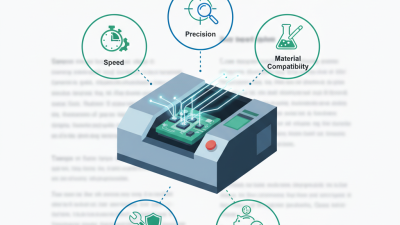
When selecting a wire bonding machine, several key features warrant close attention. One of the most critical aspects is the machine's bonding technology. Different techniques, such as thermosonic or ultrasonic bonding, suit various applications. Understanding these technologies helps align the machine with specific project needs.
Additionally, the machine's bonding speed greatly influences productivity. Faster machines can improve throughput but may compromise quality if not monitored properly. It’s crucial to assess the balance between speed and accuracy. Also, consider the equipment’s ease of use. Ergonomics, software intuitiveness, and maintenance accessibility are often overlooked but vital for daily operations.
Next, think about the machine's compatibility with materials. Different wires and substrates require specific settings for optimal results. Manufacturers often provide guidelines, but personal experience can reveal limitations. User feedback can also highlight potential issues, leading to more informed decisions. Ultimately, it's essential to reflect on your unique requirements and the specific demands of your projects. This ensures that the chosen machine not only meets current needs but also adapts to future challenges.
Assessing Your Production Needs and Volume Requirements
When selecting a wire bonding machine, understanding production needs and volume requirements is crucial. Various studies suggest that around 70% of manufacturers say machine performance directly influences production efficiency. A detailed analysis of your production volumes can help in making an informed decision. For instance, low-volume production lines may benefit from manual or semi-automatic machines, while high-volume environments typically require fully automated systems.
It's essential to consider not only your current needs but also future growth possibilities. Market reports indicate that the demand for advanced wire bonding technologies has grown by 15% annually. Balancing your present capacity with possible scalability is critical. Smaller companies might find it challenging to invest in high-end equipment now. They could rethink long-term strategies when selecting machines. This reflection can also prevent overcommitting resources prematurely.
Assessing the types of materials used in your processes matters too. Different applications might need specific bonding techniques. Some machines handle varying wire diameters and materials. Data shows that 60% of manufacturers face challenges in adapting existing machines to new technologies. Take these factors into account as you evaluate your options. A thorough assessment might lead to more informed choices.
Production Volume and Machine Selection
This bar chart visualizes the production needs across different volume categories, showcasing low, medium, and high volume requirements. Businesses can assess which wire bonding machine best suits their production capabilities based on these insights.
Budgeting for Your Wire Bonding Machine Investment
Budgeting for a wire bonding machine can significantly impact your production capabilities. A recent industry report notes that the global wire bonding equipment market is projected to reach $4.9 billion by 2025, reflecting growing demand in sectors like semiconductor manufacturing. Understanding your budget is crucial. The initial machine cost is just one component; consider installation, maintenance, and training expenses as well.
When planning your budget, evaluate the specific requirements of your applications. For instance, high-volume production will necessitate a more advanced machine, which may stretch your financial resources. Basic models can cost between $30,000 and $100,000, while advanced systems can surpass $500,000. Not every facility needs top-tier equipment, and sometimes, a mid-range model suffices.
Reflect on the overall cost of ownership, not just the up-front investment. Calculate the total expense over the machine's lifespan. This includes operational costs, potential upgrades, and support services. An informed decision considers both short-term allocation and long-term value. Analyze your production goals and emerging technologies, ensuring the machine aligns with future needs. Balancing cost with capability can lead to better resource utilization in the long run.
How to Choose the Best Wire Bonding Machine for Your Needs? - Budgeting for Your Wire Bonding Machine Investment
| Machine Type |
Price Range (USD) |
Bonding Technology |
Production Capacity (units/hour) |
Features |
| Manual Wire Bonding Machine |
$10,000 - $20,000 |
Thermal / Ultrasonic |
50 - 100 |
Compact design, operator-friendly |
| Semiautomatic Wire Bonding Machine |
$25,000 - $50,000 |
Thermal / Ultrasonic |
100 - 250 |
Improved speed, programmable settings |
| Fully Automatic Wire Bonding Machine |
$60,000 - $120,000 |
Thermal / Ultrasonic / Laser |
250 - 500 |
High throughput, advanced automation |
| Advanced High-speed Bonding Machine |
$150,000 - $300,000 |
Laser |
500+ |
State-of-the-art technology, real-time monitoring |