China Best Hesse Bonder Manufacturer and Supplier
Semiconductor growth is increasing pressure on assembly lines to deliver consistent, traceable connections. The Semiconductor Industry Association reported global semiconductor sales of $627.6 billion in 2024, up 19.1% from 2023. That figure describes the wider market, not demand for any single bonder. Still, it helps explain why manufacturers are scrutinizing bonding accuracy, uptime, and service support. Small details matter.
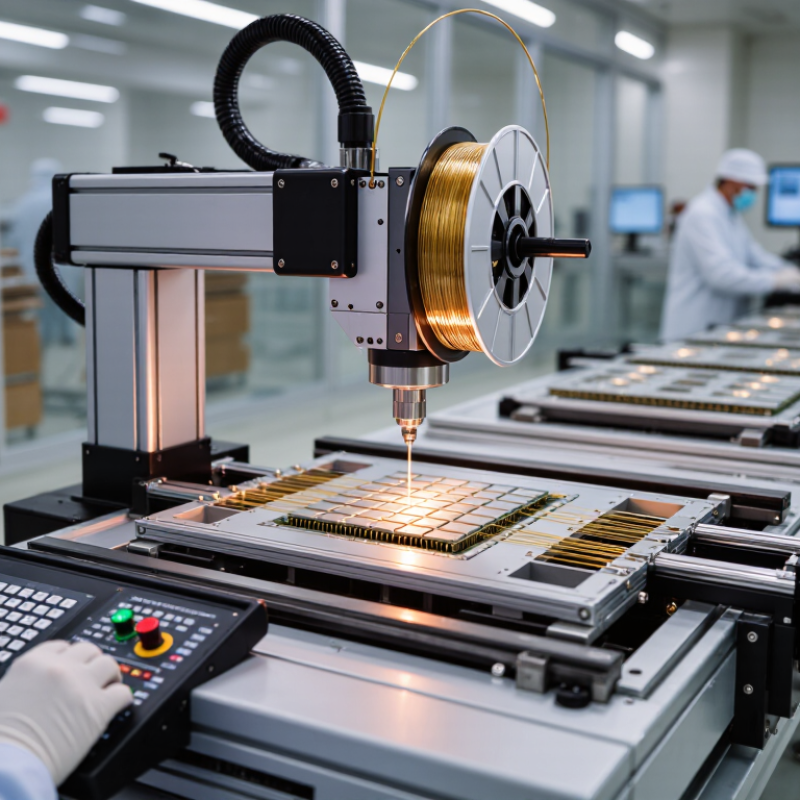
A Hesse Bonder is used in ultrasonic wire-bonding processes, where stable force, controlled motion, and repeatable cycle settings can affect connection quality. Buyers should compare machine configuration, supported wire and substrate types, process monitoring, operator training, and access to spare parts. SEMI reported that global semiconductor manufacturing equipment sales reached $117.1 billion in 2024. This is useful industry context, but it does not prove that one machine or supplier is best for every factory.
This guide examines China-based Hesse Bonder manufacturers and suppliers through practical sourcing questions: What tests are documented? Can the supplier explain calibration and maintenance intervals? Is local technical support available after installation? Ask for application-specific trial results, not just brochure specifications. A specification sheet cannot show every production-floor compromise. Supplier claims deserve careful checking, too. A sound evaluation should balance performance, compatibility, service response, and total ownership cost, while recognizing that real results depend on the application, setup, and operator practice.
What Is a Hesse Bonder and How Does It Work?
China Best Hesse Bonder Manufacturer and Supplier
What Is a Hesse Bonder and How Does It Work?
A Hesse bonder joins two prepared surfaces using controlled heat, pressure, and bonding time. It is commonly used to attach components to substrates where a stable electrical or mechanical connection is needed. The operator places the parts in a fixture, aligns them, and selects suitable process settings. The machine then applies force and heat through a bonding tool. That matters. Even a slight offset can affect contact quality.
Bonding results depend on the materials, surface condition, tool shape, and temperature profile. A well-set process can create a consistent joint without excessive pressure. Too much heat may damage sensitive components; too little may leave a weak connection. Operators should check alignment and inspect sample joints before routine production. Small changes count. Real production conditions can differ from a test setup, so settings may need careful adjustment.
Tips: Keep bonding surfaces clean and dry. Confirm the fixture holds parts firmly, but does not distort them. Record settings and inspection results for each setup. If a joint looks uneven, pause and check alignment, tool wear, and temperature readings before increasing pressure. A neat-looking joint is helpful, but it does not prove the bond is reliable.
What Is a Hesse Bonder and How Does It Work?
A Hesse bonder is used for wire bonding in semiconductor and power-electronics manufacturing. In ultrasonic wedge bonding, the machine positions the wire and wedge, applies controlled force and ultrasonic energy to form bonds, then cuts the wire. The chart shows the general process sequence.
Bars indicate chronological step number only; they do not represent bonding time, force, or ultrasonic power. Actual process settings depend on the materials and application.
The Development of Hesse Bonder Technology in China
China Best Hesse Bonder Manufacturer and Supplier
The Development of Hesse Bonder Technology in China
Hesse bonder technology in China has developed alongside the growing need for precise semiconductor assembly. Earlier production often relied on more manual setup and operator adjustments. Today, equipment increasingly combines automated positioning, machine vision, and controlled bonding force. These features help place fine wires consistently on small pads. Better process records also make it easier to trace settings when a bond fails.
Development is not just about faster machines. Chinese manufacturers and research teams continue to refine motion control, inspection, and equipment integration. In a real production line, a slight change in wire tension or surface condition can affect bonding quality. Results still depend on material choice, calibration, and skilled operators. Automation helps, but it does not solve every problem. Some systems can be difficult to tune, and that deserves more attention.
Tips: Check bond samples under magnification, record key settings, and verify calibration regularly. Start with a stable process. Small details matter.
The Development of Hesse Bonder Technology in China
| Period |
China Industry Context |
Bonder Technology Development |
Typical Applications |
Key Process Priorities |
| Before the 2000s |
Electronics manufacturing and semiconductor packaging developed around established assembly processes, with equipment capability varying by application and production scale. |
Wire bonding was an established interconnection method. Production lines relied on controlled mechanical bonding processes and operator expertise. |
General semiconductor packaging and electronic component assembly. |
Consistent bond formation, process stability, and reliable equipment operation. |
| 2000s |
Expansion of electronics manufacturing increased demand for dependable packaging equipment and higher-throughput production processes. |
Greater use of automated bonders and programmable process controls supported repeatable production and reduced reliance on manual adjustments. |
Semiconductor packages and power-electronics assemblies. |
Throughput, repeatability, recipe control, and maintenance efficiency. |
| 2010s |
Growing demand for electric vehicles, renewable-energy systems, and industrial power conversion increased the importance of power-semiconductor packaging. |
Development and use of advanced wire and ribbon bonding processes addressed demanding electrical and thermal requirements in power modules. |
Power modules, automotive electronics, and industrial power devices. |
Low-resistance connections, bond integrity, thermal performance, and process qualification. |
| 2020s |
Demand for power electronics and advanced packaging has continued alongside increased attention to domestic manufacturing capability and supply-chain resilience. |
Modern bonding lines increasingly emphasize digital monitoring, automated inspection, recipe traceability, and integration with factory production systems. |
Electric-vehicle inverters, renewable-energy converters, industrial drives, and semiconductor packages. |
Data traceability, quality monitoring, uptime, repeatability, and compatibility with automated production. |
Note: This is a qualitative industry overview. Periods describe broad technology and market trends in China; they are not company-specific milestones or quantified market data.
Main Components and Bonding Processes of Hesse Bonders
A bonder combines a rigid frame, a pressure platen, an adhesive applicator, and a control system.
The frame keeps parts steady while the platen applies even force across the joint. A heating unit may help control adhesive flow or curing, depending on the material and process. Sensors can monitor temperature, pressure, or cycle time.
Small details matter.
Bonding starts with clean, dry surfaces. Operators check the parts for dust, oil, and uneven edges before applying adhesive. The applicator lays down a measured bead or film, and alignment guides help keep components square. Pressure holds the pieces together while the adhesive sets. Some processes also use heat or a defined curing period.
A simple test piece can reveal uneven coverage before a full production run.
Good settings depend on the substrate, adhesive, and part geometry, so one recipe rarely fits every job. Operators should record pressure, temperature, and bonding time, then inspect finished joints for gaps or movement.
No setup is perfect on the first pass. Even careful adjustments may need review when material batches or workshop conditions change.
Industrial Applications of Hesse Bonder Equipment
Industrial Applications of Bonder Equipment
Industrial bonding equipment applies adhesive in a controlled way across production lines. In furniture workshops, it can join veneer, edge strips, and panel layers. Packaging plants may use similar systems to bond cartons and laminated materials. Insulation and construction-product manufacturers also rely on consistent adhesive coverage. A clean, even layer matters. Too much adhesive can squeeze out at the edges, while too little may weaken the joint.
The equipment can support manual workstations or automated lines, depending on production volume and material shape. Operators should check surface cleanliness, adhesive temperature, feed rate, and curing conditions before a run. These details affect bond quality, but the right settings vary by material and adhesive. A short test on sample pieces is often more useful than relying on a standard setting. Results should be recorded and reviewed when materials or conditions change.
Tips: Keep application rollers and nozzles clean. Check the bond after curing, not just while parts are pressed together. Small tests help catch uneven coverage early.
How to Evaluate Hesse Bonder Manufacturers and Suppliers in China
China Best Hesse Bonder Manufacturer and Supplier
How to Evaluate Hesse Bonder Manufacturers and Suppliers in China
When comparing Hesse bonder manufacturers and suppliers in China, start with the machine’s working range. Ask for supported materials, bonding dimensions, cycle time, and typical operating conditions. A clear specification sheet should match your production needs, not just list impressive numbers. Details matter. Request a sample run using your own material, then inspect bond strength, alignment, and finish under consistent conditions.
Check how each supplier handles quality control and after-sales support. Ask for inspection records, operator training details, spare-parts availability, and a written response-time policy. If possible, review the production area by video or during a factory visit. Look for orderly assembly stations and traceable component records. Ask for proof. A polished demonstration alone cannot show long-term reliability, and no checklist catches everything.
Tips: Share your material thickness, target output, and defect limits before requesting a quotation. Compare total costs, including installation and maintenance, rather than focusing only on the purchase price. Ask the supplier to explain any specification you cannot verify. I would still leave room for judgment; a tidy document set does not guarantee a smooth working relationship.