Choosing a China-based Westbond Wire Bonder supplier involves more than comparing catalog prices. Buyers need to assess bond consistency, machine condition, software support, spare-part availability, and the supplier’s ability to demonstrate the equipment on representative materials. A polished brochure is useful, but a witnessed trial bond is better.
SEMI reported that global semiconductor assembly and packaging equipment sales rose 25% to approximately US$6.7 billion in 2024. This figure describes the broader equipment market, not Westbond machines alone. It signals renewed investment, but it cannot establish a fair price for a particular model. SEMI President and CEO Ajit Manocha has connected equipment investment with demand for AI-related technologies; that industry-wide trend helps explain buyer interest, not the value of any single bonder. I could not verify a published, Westbond-specific expert quotation, so I will not present an invented sentence as his or another specialist’s words.
Price depends on configuration, age, service history, included tooling, and whether the machine is new, used, or refurbished. Ask for a written quotation that lists these items separately. Then request sample-bond results, maintenance records, and a clear warranty scope. Small details matter. A missing tool or delayed replacement part can change the real cost. This guide compares supplier claims with practical checks, while recognizing that price data may be incomplete and model-to-model comparisons are imperfect. That uncertainty deserves attention.
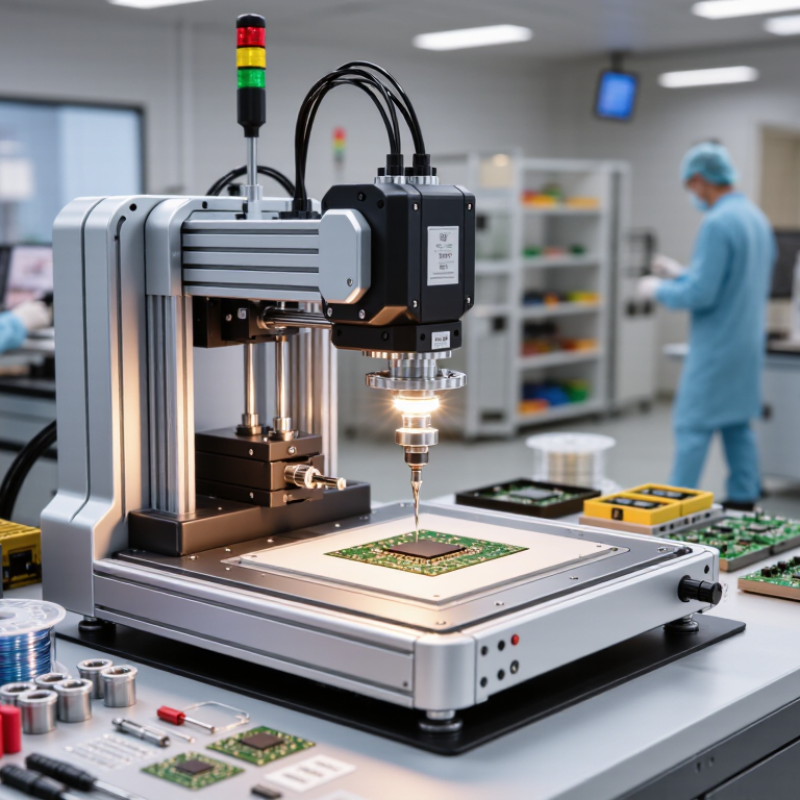
A wire bonder is a precision machine that connects a semiconductor die to package leads using a very fine metal wire, commonly copper or gold. It positions the wire, forms a bond at the die pad, then creates a second bond on the lead or substrate. In thermosonic bonding, controlled heat, ultrasonic energy, and pressure help create the connection. A capillary tool guides the wire; under a microscope, the operator checks bond placement, wire loops, and pad condition. Small changes matter. A worn tool or dusty surface can weaken bonds.
SEMI’s 2024 equipment forecast projected global assembly and packaging equipment sales would rise 10.1% to $5.3 billion in 2024. This broader industry figure signals continued investment, but it does not measure wire bonder performance or predict a specific machine’s price. In practice, buyers should compare bond accuracy, cycle time, supported wire materials, maintenance needs, and process documentation. A faster machine is not always the better choice if setup changes cause inconsistent loops. The trade-off can be easy to overlook.
Tips: Ask for sample bonds on your actual package, then inspect pull strength and bond shape. Keep a record of settings. One test is not enough.
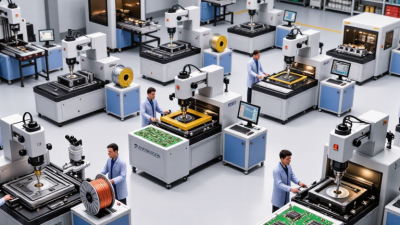
When comparing wire bonder models, start with the packages and wire diameters they can handle. Check whether the machine supports the required ball or wedge bonding process, then review bond-force range, motion accuracy, and loop-profile control. These affect delicate die pads and the height of wire loops. Ask for sample bonds using your actual substrate and wire. A brochure cannot show every process limitation.
Throughput matters, but compare it under similar conditions, including indexing time and operator intervention.
Yole Group’s 2023 advanced-packaging market analysis projected growth from about $44 billion in 2022 to $78 billion by 2028. That forecast points to rising packaging demand, not guaranteed demand for any one bonder type.
Check repeatability data, changeover time, software access, and local service response. Small details count. Request maintenance intervals and spare-part costs in writing. A neat specification sheet can still mislead; real production trials may reveal inconsistent loops or longer setup times. I would weigh stable yield more heavily than a headline speed figure.
When evaluating a wire bonder supplier in China, start with your actual process requirements. Share the wire material and diameter, die size, bond pitch, and expected production volume. Ask for a live demonstration using comparable parts, not only a prepared sample. Inspect bond consistency under magnification, then review pull-test or shear-test results. A smooth demo is useful, but it is not proof of stable production.
Check whether the supplier provides installation, operator training, spare-part availability, and clear response times for service requests. Request a written quotation that separates the machine, tooling, shipping, and optional features. Compare those details rather than headline prices alone. It is tempting to trust the lowest quote. That can be a mistake. One detail is easy to miss: confirm the proposed acceptance criteria before placing an order, so both sides know how performance will be checked.
Tips: Ask for sample bonds on your own materials. Keep the test settings and results. Request references from users with similar production needs, and verify what support they actually received. If specifications remain vague, pause and ask for clarification. Good suppliers should explain limits as well as capabilities.
Wire bonder prices depend on more than the machine’s age. A basic unit for small production runs usually costs less than an automated system with vision alignment and recipe storage. Bonding method, supported wire diameters, and placement accuracy also affect the price. A machine that handles fine-pitch work may need more precise motion controls and inspection features. Those details add cost.
Condition matters. Ask for recent service records, a demonstration using your intended materials, and a check of bond pull strength. A low purchase price can be misleading if the stage is worn or the bonding head needs replacement. Tooling, spare parts, software options, operator training, and installation may be billed separately. Freight and setup can also change the final budget. I have seen buyers focus too much on the listing price; the full cost is easier to miss.
Tips: Request a written quote that separates the machine, tooling, service, and delivery. Compare cycle time and sample-bond quality, not just sticker price. If the seller cannot show a test, pause. It may be inconvenient, but it is a useful warning.
Relative influence of common purchasing factors
Ratings use an indicative 1–5 scale to compare typical buyer considerations; they are not measured market-price percentages or a supplier quote. Actual prices vary with machine configuration, condition, included options, service, and regional terms.
Choosing a suitable Westbond wire bonder supplier starts with your actual production needs. Specify the wire material and diameter, bonding method, die dimensions, and expected daily output. A machine suited to fine-wire laboratory work may not fit a high-volume line. Details matter. Ask whether the quoted configuration includes the required tooling, microscope, software, and safety features. Request a demonstration using representative parts, if possible, and check how consistently the machine forms bonds across several samples.
A useful quote should separate machine cost from installation, training, shipping, and optional accessories. Include the machine’s condition, configuration, lead time, warranty terms, and availability of replacement parts. Ask who handles calibration and how quickly technical support usually responds. These details are easy to overlook when comparing headline prices. A lower quote may leave essential items out; still, a higher price is not proof of better service.
Send suppliers the same written specifications so their offers can be compared fairly. Ask for an itemized quotation in your preferred currency, with payment terms and any quote expiration date stated clearly. If your process is unusual, describe it plainly rather than assuming the supplier will infer it. I would also ask which limitations remain after installation. That question can feel awkward, but it often reveals whether the proposed machine is a practical match.
Use this comparison as a purchasing checklist. The price ranges below are broad, indicative budget estimates in USD for wire bonders generally—not verified prices for a particular brand, model, or supplier. Request a configuration-specific quotation and confirm the machine’s condition, included options, and service terms.
| Comparison dimension | What to check | Practical guidance |
|---|---|---|
| Machine type | Manual, semi-automatic, or fully automatic operation | Match automation to production volume, labor availability, and required cycle time. Ask for a demonstration using representative parts. |
| Bonding process | Ball bonding or wedge bonding; compatible wire material and diameter | Specify the wire type, diameter, pad material, and target bond layout. Confirm compatibility in writing rather than relying on a general model description. |
| Indicative budget | Broad planning estimates in USD; actual prices vary substantially | Manual: about $10,000–$40,000; semi-automatic: about $40,000–$150,000; fully automatic: about $150,000–$500,000 or more. These are general market estimates, not a supplier quote. |
| New or used condition | Manufacturing year, operating hours, refurbishment, and service history | For used equipment, request a live operating test, maintenance records, photographs of wear-prone assemblies, and a written list of replaced parts. |
| Configuration and tooling | Workholder, capillary or wedge tool, wire clamp, microscope, heater, and software options | Ask the supplier to itemize included and optional components. Confirm that tooling fits your package dimensions and intended bonding process. |
| Demonstration and acceptance | Sample bonding, bond-pull or bond-shear results, and agreed acceptance criteria | Provide representative substrates and written process requirements. Agree in advance on the test method, sample quantity, and pass criteria. |
| Service and training | Installation, operator training, spare parts, technical support, and response time | Confirm what support is available at your location, which parts are stocked, warranty duration, and whether remote or on-site service is included. |
| Delivery and total cost | Packaging, freight, insurance, export documents, installation, taxes, and payment terms | Compare total landed cost, not only the equipment price. Ask for the shipping terms, estimated lead time, and a clear payment schedule. |
| Information for a quote | Required process and purchasing details | Include bonding method, wire material and diameter, substrate and package dimensions, target output, preferred machine condition, destination country, and requested delivery date. |