Leave Your Message

7 Best Wire Bonders for Sale in 2026

Choosing among the 7 Best Wire Bonders for Sale in 2026 takes more than comparing price tags. A machine that performs well on a lab bench may struggle with a long production shift. The right choice depends on wire material, package size, bond speed, operator skill, and service access. Small details matter. A stable capillary, clear microscope view, and repeatable bonding force can save hours of rework.

Packaging expert Rao R. Tummala is widely associated with the observation, “Packaging is the bridge between the chip and the system.” That idea applies directly to wire bonding: each tiny connection must support the larger device’s electrical and mechanical needs. Buyers should compare manual, semi-automatic, and automatic Wire Bonders carefully. Check the supported wire diameters, bonding modes, software controls, and availability of spare parts. Ask for sample-bond results on materials close to your own. A polished demonstration is useful, but it is not a production record.

This guide considers practical fit, not just impressive specifications. It highlights equipment for research labs, repair work, and higher-volume manufacturing, while noting where a model may demand extra setup or operator experience. There is no perfect machine for every shop. Even a strong shortlist has trade-offs, and used equipment can carry uncertainties around calibration and maintenance history. Those points deserve a closer look before purchase.

7 Best Wire Bonders for Sale in 2026

Understanding Wire Bonders and Their Main Applications

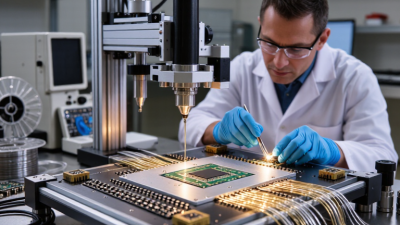
Wire bonders connect a semiconductor die to package leads using fine metal wire, typically gold, copper, or aluminum. A capillary or wedge tool forms each bond, while the machine controls force, heat, timing, and wire-loop shape. The result is a practical interconnect used in many QFN and lead-frame packages, power devices, sensors, and LEDs. Small details matter. Pad spacing, wire diameter, and die layout can change which bonder and bonding method fit the job.

The Semiconductor Industry Association, drawing on WSTS data, reported worldwide semiconductor sales of $627.6 billion in 2024, up 19.1% from 2023. This figure measures chip sales, not wire bonder demand, but it shows the scale of the production ecosystem these tools serve. In real production, buyers compare more than bonding speed: they check placement accuracy, changeover time, supported wire types, process monitoring, and service access. A fast machine may be a poor match if operators struggle to tune its loop profile.

Wire bonding remains useful where cost, flexibility, and established package designs matter. It is not ideal for every high-density layout; limited pad pitch can make other interconnect methods more suitable. A neat specification sheet can still mislead. Ask for sample bonds using your actual die, lead frame, and wire, then inspect bond strength and loop consistency. That practical test often reveals issues a brochure cannot.
Key Features to Compare When Buying a Wire Bonder

When comparing wire bonders, start with the materials and parts you actually run. Check supported wire diameters, wire types, die sizes, and substrate dimensions against your production range. A machine that handles your current package may struggle with a thinner wire or a taller die. Fit matters.

Bond control deserves close attention. Look for adjustable bonding force, ultrasonic power, time, and loop height, plus clear recipe storage. These settings affect bond consistency, but specifications alone cannot prove performance. Ask to test representative parts and inspect pull-test results, bond shape, and repeatability across a full run. Small differences show up.

Motion and vision systems also influence usable output. Compare placement accuracy, camera resolution, lighting, and how easily operators can correct alignment. Request cycle-time data for your own pattern; advertised speed may exclude loading, inspection, or changeovers. A fast head is not always a fast process.

Finally, consider setup and support. Review fixture changes, software access, operator training, spare-part availability, and maintenance intervals. Ask how quickly a technician can diagnose common faults, and whether service includes remote assistance. One detail is easy to miss: a complex machine can require more tuning than your team expects. Be honest about that trade-off.

Representative wire diameter ranges by bonding application

Wire diameter capability is one practical specification to compare when choosing a wire bonder. The ranges shown are general industry examples, not guarantees for every machine; confirm supported wire materials and diameters with the equipment supplier.

Seven Wire Bonders to Consider in 2026

A useful 2026 shortlist should compare working methods, not just advertised speed. A manual wedge bonder suits low-volume jobs and process development, where an operator can inspect each bond. A manual ball bonder offers another hands-on option for fine wire and compact pads. Both demand steady technique. Small details matter.

For repeat production, a semi-automatic ball bonder can reduce handling while keeping an operator involved in alignment and checks. A fully automatic ball bonder is worth considering when output is high and parts arrive consistently positioned. Thermosonic bonding combines heat and ultrasonic energy, while ultrasonic wedge bonding is useful when the material and package design call for wedge-shaped connections. These are different process choices, not interchangeable labels. Test before buying.

The seventh option is a heavy-wire bonder for applications requiring larger conductors and robust connections. Compare each machine using your actual wire diameter, pad layout, substrate, and target cycle time. Ask for sample bonds, then inspect pull strength, deformation, and consistency across several locations. I would not choose by speed alone; setup time and operator training can change the real throughput. One trade-off may still feel unclear until trials begin. Check service access, tooling availability, and process documentation before making a purchase.

How the Leading Wire Bonders Differ in Performance

When comparing seven wire bonders for sale in 2026, judge performance on the same package, wire, and shift length. A fast headline cycle time can hide slow recipe changes or frequent operator adjustments. Watch the bond head place a loop over a real die. Then inspect pull-test results, tail consistency, and reject rates. Small differences matter. A tool optimized for fine-pitch work may not deliver the best output on larger power packages.

SEMI’s June 2025 forecast projects global semiconductor equipment sales of $125.5 billion in 2025 and $138.1 billion in 2026. That broader investment trend makes uptime and automation important, but it does not prove one bonder is superior. Compare measured bonds per hour, placement accuracy, changeover time, and recovery after a misfeed. Ask suppliers to run your own materials, then review the data across multiple lots—not one polished demo. I would also check how easily technicians can access capillaries and wire paths. It sounds minor. It isn’t. SEMI’s 2025 materials report recorded $67.5 billion in global semiconductor materials sales for 2024, underscoring how much production depends on stable material handling. Treat published specifications as a starting point; real process variation still deserves a hard look.

Choosing the Right Wire Bonder for Your Needs

Choosing a wire bonder starts with the package, not the machine’s headline speed. Match the process to the wire material and diameter, pad layout, die size, and required loop profile. Ball and wedge bonding use different tools and process windows, so confirm compatibility with your actual parts. Fit matters more. Ask suppliers to bond sample units and inspect pull strength, bond placement, loop consistency, and repeatability across a full production shift. A polished demo is useful, but it may hide recipe changes and handling delays.

Capacity trends help frame the purchase, but they do not predict one factory’s workload. SEMI’s July 2025 equipment forecast projected global semiconductor equipment sales of $125.5 billion in 2025 and $138.1 billion in 2026. That broader growth makes flexible capacity worth considering; it does not guarantee a new bonder will stay busy. Compare tested units per hour with your real product mix, changeover time, operator training, and expected uptime. Check whether spare capillaries or wedges are easy to obtain, and ask how calibration and service are handled. I still find it easy to overvalue maximum speed. A slower, repeatable process can waste less material, though your own trial data should decide.