What are Wire Guides and Ribbon Guides for Wire Bonders?
In the precision-driven world of electronics manufacturing, “Wire Guides and Ribbon Guides for Wire Bonders” play a critical role. These components facilitate the accurate placement and tension of wire bonds in semiconductor devices. According to a recent industry report by TechInsights, the market for wire bonding equipment, including guides, is projected to grow by 5.4% annually through 2027.
Dr. Emily Chen, a leading expert in wire bonding technology, emphasizes, “The right guide design can significantly enhance bond quality and reliability.” Her insights reflect the ongoing need for innovation in wire guide systems. Current trends highlight a shift towards customization to meet the demands of increasingly complex electronic components. This complexity necessitates guides that adapt to various shapes and sizes, presenting a challenge for manufacturers.
Observing these developments, it's evident that there’s a gap in understanding optimal design parameters. Many firms still use outdated guides that do not leverage advancements in materials or technology. Continuous exploration in this area is essential, as better wire guides can lead to substantial improvements in product performance and cost efficiency.

What are Wire Guides in Wire Bonders?
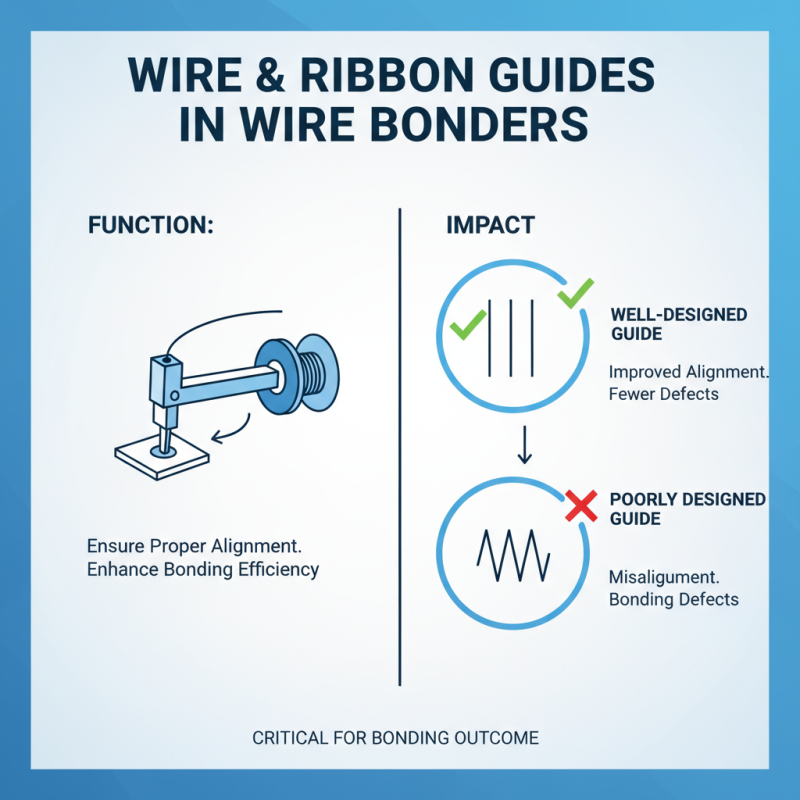
Wire guides play a crucial role in wire bonding processes. They ensure the precise placement of wires during bonding. A good wire guide minimizes wire movement, enhancing the accuracy of the bond. When wires are guided correctly, the quality of the connection improves significantly.
Using the right wire guide is essential. Different applications may require varying shapes or materials. Some guides focus on reducing friction while others prioritize stability. Understand the requirements of your specific process. Testing different configurations can yield better results.
Tips: Always check the cleanliness of wire guides. Dirt can affect bond quality. Regular maintenance helps prevent issues. It’s also important to monitor wear and tear. Worn guides can lead to inconsistent wire placement. Reflecting on the performance can reveal necessary adjustments. Adjustments might involve changing materials or the guide's design. Keeping records of modifications can offer insights.
Types of Wire Guides Used in Wire Bonders
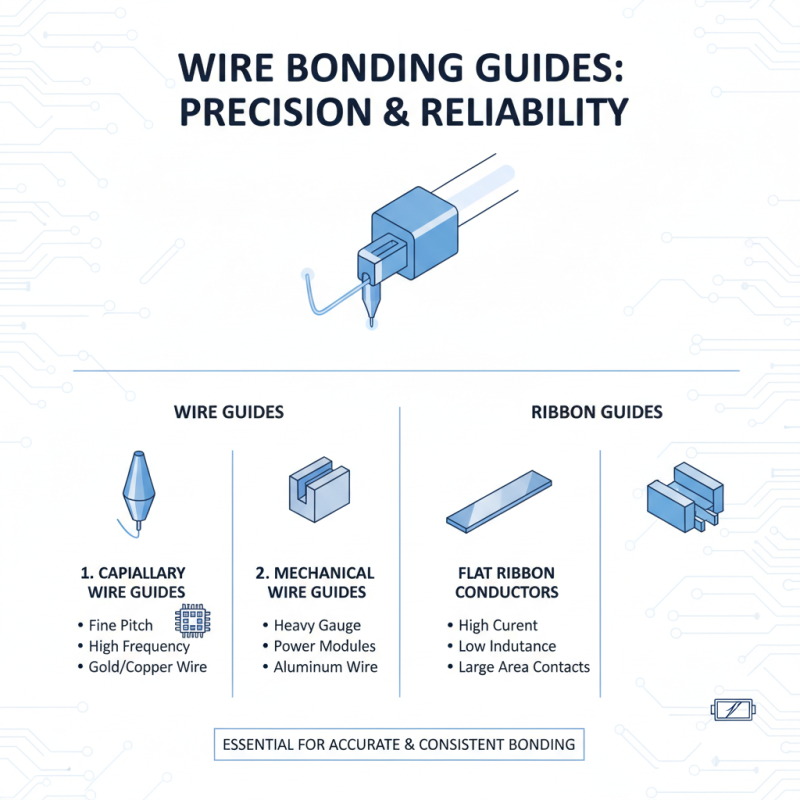
Wire guides and ribbon guides are essential components in wire bonders. These tools ensure precision and reliability during the bonding process. Two main types of wire guides are commonly used: capillary wire guides and mechanical wire guides. Each type has distinct applications and benefits.
Capillary wire guides are designed for fine wire bonding. They have a small diameter that accommodates various wire types. Reports indicate that 65% of high-frequency applications utilize capillary guides for their superior control and accuracy. However, they can be challenging to handle. Users may encounter issues when aligning the wire properly. Improper alignment can lead to inconsistent bonding.
Mechanical wire guides, on the other hand, are used for larger wires. Their robust design enhances stability, making them ideal for various bonding tasks. Approximately 70% of production environments prefer mechanical guides due to their durability. Yet, they may not provide the same level of precision as capillary guides. Operators often need to fine-tune their techniques to achieve the desired results. Balancing efficiency and quality remains a constant challenge for technicians in the industry.
Introduction to Ribbon Guides in Wire Bonders
Ribbon guides play a crucial role in wire bonding applications. They help position the wire precisely during the bonding process. With their flat design, they provide a stable path for the wire. This is essential for achieving quality connections in electronic components.
The design of ribbon guides can vary. Some are made of metal, while others are plastic. Each material has its own pros and cons. For example, metal guides can be more durable but may wear out wires faster. Plastic guides are gentler but may not withstand high temperatures. Choosing the right guide can be challenging.
Proper alignment is key to effective bonding. Misalignment can lead to defect-prone connections. Sometimes, users overlook the importance of correct positioning. They might think a little inconsistency won't matter, but it often does. Regular maintenance and careful setup of ribbon guides can lead to better results. This requires constant reflection and adjustment. Experimenting with different configurations can lead to improvements.
Comparison Between Wire Guides and Ribbon Guides
Wire guides and ribbon guides are crucial components in wire bonders, each serving distinct purposes.
Wire guides are specifically designed to manipulate and guide the wire during the bonding process.
They ensure seamless wire placement onto the substrate or die.
The precision of these guides directly affects the quality of the bond. A slight misalignment can lead to defects,
underscoring the need for exact specifications.
On the other hand, ribbon guides are employed for ribbon bonding applications.
They manage the larger ribbon used in certain assembling processes. These guides help maintain the ribbon's shape and position while bonding.
They are typically constructed to accommodate the ribbon's width and thickness, ensuring that the bonds are uniform.
Improper setup can result in uneven bonds or excess material wastage.
Tip: Always check the alignment of guides before starting the bonding process.
Small adjustments can lead to significant improvements.
Another tip: Regular maintenance on wire and ribbon guides can prevent performance issues.
Wear and tear can lead to misalignment and errors in the bonding process.
Both guides require careful attention during setup. Users should remain vigilant for any signs of wear
to maintain quality and efficiency in bond production.