Leave Your Message

Top 10 Reasons to Choose an Automatic Wire Bonder?

In today’s fast-paced electronics market, the demand for efficient manufacturing is higher than ever. The Automatic Wire Bonder has emerged as a vital tool in semiconductor and microelectronics industries. Reports indicate that the global wire bonding market is expected to reach $2.2 billion by 2027, highlighting the growing reliance on automated solutions.

Choosing an Automatic Wire Bonder can significantly enhance productivity. These machines offer precision and speed, allowing manufacturers to meet tight deadlines. A study showed that production cycles could be reduced by up to 30% with automation. However, some companies still hesitate. Concerns about initial costs and maintenance often arise.

In this context, understanding the key advantages of Automatic Wire Bonders becomes essential. From improved yield rates to reduced labor costs, the benefits are compelling. Yet, it is crucial to evaluate the specific needs of your production line. Every investment carries risks, and automation is no exception. Balancing efficiency with quality is a challenge that requires careful consideration.
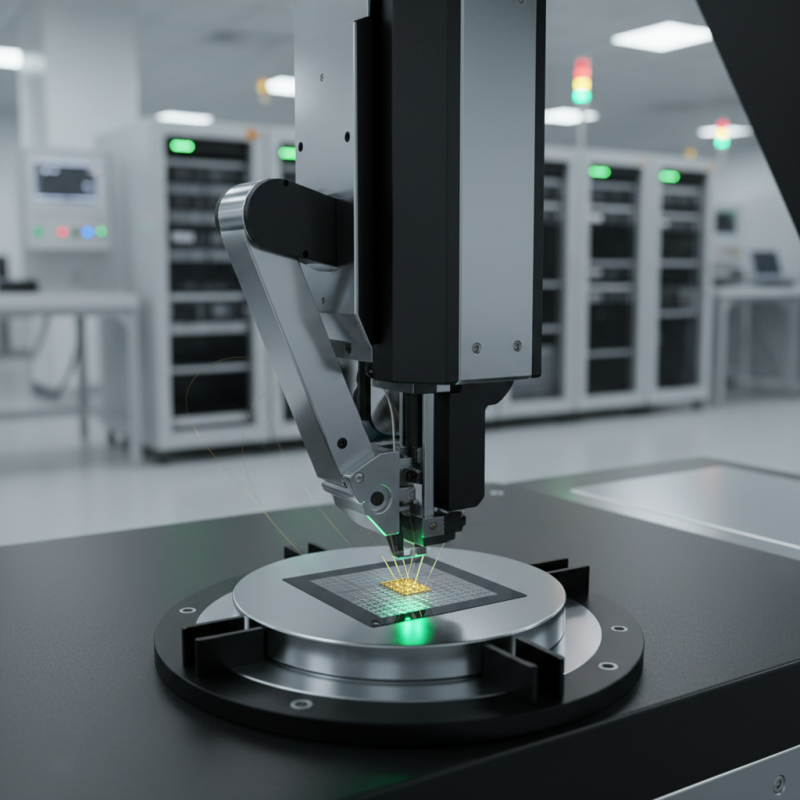
Top 10 Reasons to Choose an Automatic Wire Bonder?

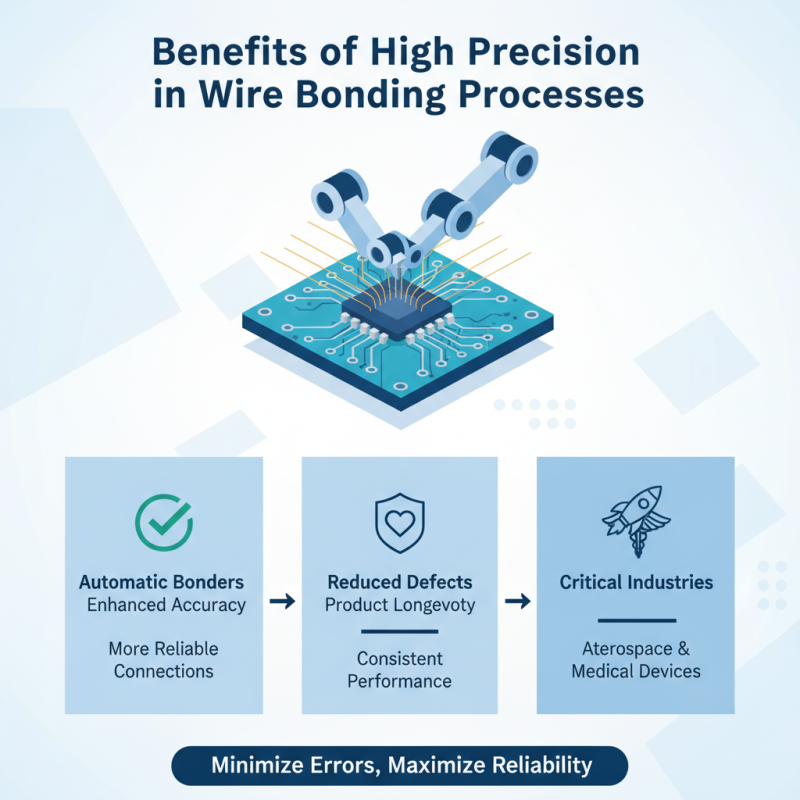
Benefits of High Precision in Wire Bonding Processes

Top 10 Reasons to Choose an Automatic Wire Bonder?

High precision is crucial in wire bonding processes. Automatic wire bonders enhance precision, which leads to more reliable connections in electronic components. A small misalignment can cause failures. This is particularly critical in industries like aerospace or medical devices, where even tiny errors can have serious consequences. Increased accuracy minimizes the potential for defects, ensuring product longevity and performance.

Moreover, automatic wire bonders maintain consistency and repeatability. Manual processes often lead to variation. Each bond may differ slightly, impacting overall quality. With automation, the machinery can produce bonds that are uniformly executed, reducing the chance of human error. Yet, even automated systems can malfunction. Regular maintenance and monitoring are essential to uphold their integrity.

Achieving high precision in wire bonding is not just technical. It involves understanding the materials used and their behaviors. Different wire sizes and surface finishes affect bonding quality. A wrong choice can compromise precision. Operators must be aware of these details and adapt processes accordingly. The pursuit of perfection in bonding processes is ongoing, reflecting the need for constant learning and adaptation.
Enhanced Production Speed: Automation vs. Manual Bonding

In the world of electronics manufacturing, speed is essential. An automatic wire bonder significantly enhances production speed compared to manual methods. By utilizing automation, production lines can operate continuously and with precision. This leads to faster turnaround times on assemblies, allowing companies to meet deadlines effectively. It’s a game-changer for meeting high-volume demands.

However, automation is not without its challenges. Initial setup costs can be high, and training for operators is essential. There might be a learning curve, and adjustments take time. Occasionally, machines can experience malfunctions, leading to delays. Yet, the reliability and consistency of an automatic wire bonder often outweigh these drawbacks.

Investing in an automatic system requires careful consideration of production goals. It’s crucial to evaluate existing workflows. Making the leap to automation can be daunting. Companies must weigh the potential benefits against the initial hurdles they may face. Ultimately, the advantages in speed and efficiency can transform production capabilities. Yet, many must reflect on how to integrate these systems seamlessly into their operations.

Cost Efficiency Analysis: Reducing Labor and Material Waste

Top 10 Reasons to Choose an Automatic Wire Bonder?

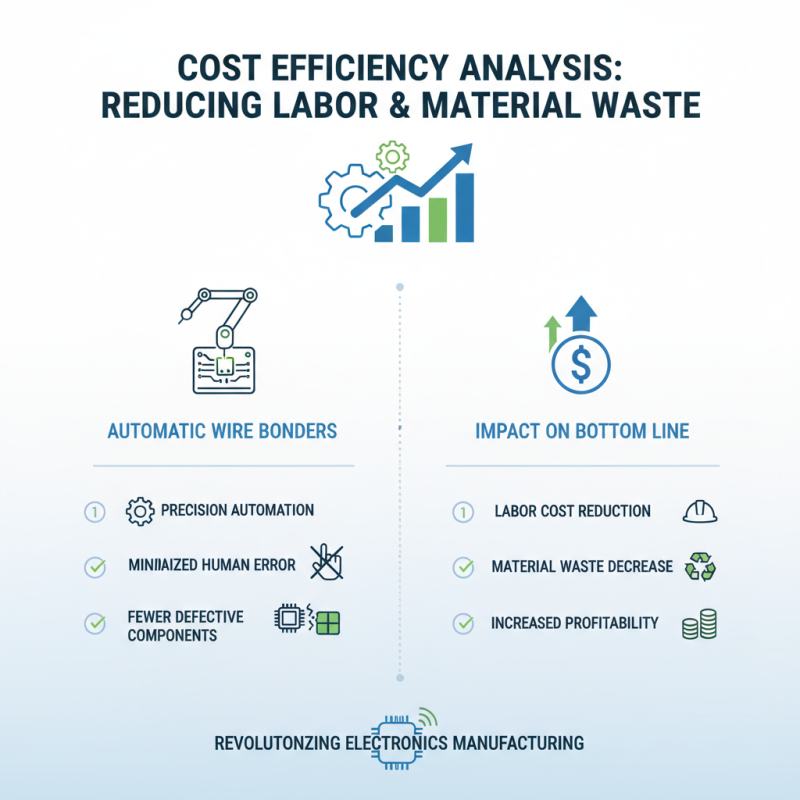
Automatic wire bonders are revolutionizing the electronics industry, particularly regarding cost efficiency. By reducing labor and material waste, they significantly affect the bottom line. These machines operate with precision, minimizing errors that human operators might make. This translates to fewer defective components and lowers production costs.

To maximize cost efficiency, consider these tips: invest in training for your team on operating bonders. Proper training enhances productivity and reduces the likelihood of errors. Regular maintenance of the equipment is also critical. It prevents downtime and ensures optimal performance.

While automatic wire bonders can decrease material waste, they are not flawless. Operators might still encounter issues that require manual adjustments. This human input can slow down the process. It's crucial to strike a balance between automation and human oversight. Reflecting on these challenges can lead to a more streamlined operation and improved results.

Increased Consistency and Reliability in Electronic Assemblies

Automatic wire bonders play a vital role in electronic assemblies. They ensure increased consistency and reliability in the production process. This is crucial for meeting the demands of modern electronics. Traditional bonding methods can lead to variations in quality. Automatic wire bonders reduce these risks significantly.

With automatic systems, the probability of human error diminishes. Each bond is created with precision, ensuring uniformity in each connection. However, setting up these machines requires skilled personnel. There can be a learning curve. Sometimes, adjustments may be needed for different materials. These factors should not be overlooked.

Additionally, maintenance is essential for optimal performance. Regular checks can prevent inconsistencies that lead to defects. Overall, the benefits often outweigh the challenges. Increased consistency leads to higher reliability in products. This can strengthen consumer trust. Nonetheless, manufacturers need to remain vigilant in monitoring performance.

Top 10 Reasons to Choose an Automatic Wire Bonder

Reason Description Benefits
1. Increased Consistency Automatic wire bonders ensure uniform bonding pressure and speed. Improves product quality and reduces wastage.
2. Enhanced Reliability Reduces human error in wire bonding processes. Increases the longevity of electronic assemblies.
3. Time Efficiency Faster operation compared to manual bonding. Higher throughput in assembly lines.
4. Improved Repeatability Consistently achieves the same bond quality. Ensures that every product meets strict standards.
5. Reduced Labor Costs Less manual intervention allows for fewer operators. Decreases overall production costs.
6. Data Logging Capabilities Tracks bond parameters for quality assurance. Facilitates process improvements and audits.
7. Flexibility in Design Can bond various wire sizes and materials. Adaptable to different electronic assembly requirements.
8. Advanced Technology Incorporates cutting-edge features like ultrasonic bonding. Enhances bonding quality and reduces cycle time.
9. Space Optimization Compact design fits into limited workspace. Maximizes available production area.
10. Comprehensive Support Access to specialized training and maintenance. Ensures optimal performance over time.

Technological Advancements in Automatic Wire Bonding Systems

Automatic wire bonding technology has undergone significant advancements in recent years. According to industry reports, the global market for wire bonding is projected to grow at a compound annual growth rate (CAGR) of 5.4% through 2027. This growth is driven by the increasing demand for miniaturized electronics in various sectors, including automotive and consumer electronics.

New methods in automatic wire bonding systems enhance precision and speed. For instance, advanced sensors and AI algorithms enable real-time monitoring of bonding quality. This automation reduces human error, increasing overall yield and reliability. Most systems now offer capabilities for fine-pitch bonding, essential for modern chip designs.

However, challenges persist. Not all facilities have adapted to these technological shifts. Many still rely on older, manual processes, which can lead to inefficiencies. Additionally, some engineers express concerns over the learning curve associated with new systems. As the industry evolves, continuous training remains vital for optimizing bonding processes. Balancing innovation with skill development is crucial for maximizing benefits.

Top 10 Reasons to Choose an Automatic Wire Bonder

The chart above illustrates the top 10 reasons to choose an automatic wire bonder, based on their importance level. Each reason is rated on a scale of 1 to 10, showcasing how key attributes contribute to the advantages of using automatic wire bonding systems in modern electronics manufacturing.