Leave Your Message

What Are the Top 10 Die Pick Up Tools and Collets?

As semiconductor packages become thinner, smaller, and more densely interconnected, die handling requires greater control. Die Pick Up Tools and Collets influence placement accuracy, surface protection, cycle time, and yield. A tiny vacuum leak can shift a die by several microns. A poorly matched collet can also mark fragile back surfaces or disturb delicate bumps.

SEMI reported that global semiconductor manufacturing equipment sales reached approximately $117.7 billion in 2024. This figure reflects continuing investment in wafer fabrication, assembly, and advanced packaging equipment. Yole Group’s Status of the Advanced Packaging Industry 2024 also identifies advanced packaging as a major growth area, driven by chiplets, high-bandwidth memory, and heterogeneous integration. These trends increase the need for reliable pickup solutions, not merely faster tools.

The top ten choices should therefore be judged by measurable performance, not marketing language. Important factors include die dimensions, vacuum stability, contact geometry, ceramic or carbide material, thermal behavior, and cleaning requirements. Experienced engineers also inspect edge chipping, backside marks, pickup repeatability, and collet life during production trials. Small details matter.

There is no universal “best” option. A tool designed for large silicon dies may perform poorly on ultra-thin chips or bumped devices. That is easy to overlook. This guide compares ten widely used Die Pick Up Tools and Collets through practical selection criteria, manufacturer specifications, and industry evidence. Some rankings remain debatable, because application data is often confidential. Still, careful comparison can reduce trial-and-error, protect yield, and support more dependable die bonding operations.
What Are the Top 10 Die Pick Up Tools and Collets?

Die Pick Up Tools: Purpose, Structure, and Operating Principles

Die pick-up tools are precision devices used to lift, align, and place semiconductor dies during assembly. Their purpose is simple: transfer a fragile die without damaging its active surface, edges, or bonding area. In practice, the smallest contact error can create cracks or poor placement.

A typical tool combines a lightweight shaft, a vacuum path, and a replaceable collet. The collet touches the die at a controlled location. Its opening must match the die size and contact pattern. Soft materials can reduce scratches, while rigid materials improve dimensional stability. However, softer tips may wear faster.

During operation, a vacuum pump creates negative pressure through the collet. The tool approaches vertically, contacts the die, and lifts it with limited force. A controlled release then places the die onto its target. Operators should inspect vacuum stability, tip cleanliness, and alignment before each production run. Even a tiny particle can tilt the die.

The top ten die pick-up tools often differ in shaft design, collet geometry, vacuum control, and manual or automated operation. Selection depends on die thickness, surface sensitivity, placement accuracy, and working speed. Practical testing remains essential. A tool that performs well on one die may behave poorly on another.

My own preference is careful verification over impressive specifications, because real assembly conditions are rarely perfect.

How to Evaluate Die Pick Up Tools for Precision and Reliability

Evaluating the top ten die pick up tools requires more than comparing catalog photographs. SEMI’s 2024 World Fab Forecast projects semiconductor manufacturing equipment sales of about 109 billion dollars in 2024. That growth increases pressure on handling precision, uptime, and contamination control. However, market growth does not prove a tool’s reliability. Each candidate needs testing with the actual die size, substrate, adhesive, and thermal profile.

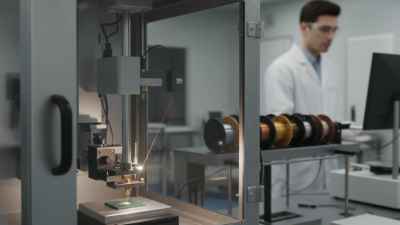
Start with measurable performance. Record X-Y placement error, Z-axis repeatability, pickup force, and vacuum stability. Test at production temperature, not only in a clean laboratory. A suitable collet should hold the die without edge chipping or backside marks. Check its inner surface under magnification after repeated cycles. Small particles can become large yield problems.

Use a gauge repeatability and reproducibility study before approving any tool. A 30-day production trial is more convincing than a short demonstration. Track mispicks, dropped dies, changeover time, and cleaning frequency. The International Roadmap for Devices and Systems 2024 highlights heterogeneous integration as a continuing packaging priority, where alignment and handling margins become tighter. That matters for advanced assemblies.

Ask suppliers for traceable test data, expected cycle life, maintenance intervals, and failure records. SEMI E10 terminology can help compare availability and downtime consistently. I would distrust perfect claims without raw measurements. One overlooked weakness remains operator changeover. A highly precise tool may still underperform when collets are difficult to inspect, install, or clean.

What Are the Top 10 Die Pick Up Tools and Collets? - How to Evaluate Die Pick Up Tools for Precision and Reliability

A practical comparison of commonly used die pick-up tool configurations for semiconductor assembly, inspection, rework, and laboratory handling. Specifications are typical engineering ranges and should be verified against the die geometry and process equipment.

Rank Tool or Collet Type Pick-Up Principle Typical Die Size Contact Material Alignment and Stability Best-Fit Applications Key Reliability Considerations Precision Rating
1 Precision Vacuum Pick-Up Pen
Manual or bench-top tool
Controlled vacuum through a replaceable tip lifts the die from the top surface. Approximately 0.5–20 mm square or rectangular dies Silicone, polyurethane, or conductive rubber tip Good for visual alignment; stability depends on tip flatness and vacuum level. Die inspection, placement correction, laboratory handling, and low-volume assembly Use a clean, compliant tip; excessive vacuum can stress thin or cracked dies. ★★★★★
2 Vacuum Collet
Rigid production pick-up head
Vacuum is applied through a precisely machined collet face. Approximately 1–25 mm, depending on collet geometry Stainless steel, ceramic, nickel-plated metal, or polymer-coated surface Very high repeatability when the face is concentric and parallel to the die. Die attach, flip-chip handling, LED assembly, and automated placement Check vacuum-hole location, sealing surface wear, clogging, and runout. ★★★★★
3 Soft Elastomer Tip
Low-marking pick-up tip
A compliant elastomer creates a temporary vacuum seal while distributing contact pressure. Approximately 0.3–15 mm Silicone or other low-durometer elastomer Excellent surface conformity; moderate geometric repeatability. Thin dies, fragile substrates, optical components, and devices with sensitive top surfaces Monitor compression set, particle shedding, solvent compatibility, and tip contamination. ★★★★☆
4 Ceramic Vacuum Collet
High-wear precision collet
Vacuum holds the die against a hard, dimensionally stable ceramic face. Approximately 1–15 mm Alumina, zirconia, or other technical ceramic Excellent dimensional stability and low thermal expansion. High-cycle automated assembly and processes requiring low particle generation Inspect for chipped edges; avoid impact loading and verify the ceramic finish. ★★★★★
5 Split Collet
Mechanical gripping collet
Spring-loaded or actuated fingers grip the die edges instead of using top-surface vacuum. Approximately 2–20 mm, subject to edge clearance Hardened metal with polymer or elastomer contact inserts Strong retention; centering quality depends on finger symmetry and travel control. Porous, vented, textured, or contaminated surfaces where vacuum is unreliable Control gripping force carefully to prevent edge chipping, cracking, or metallization damage. ★★★★☆
6 Expanding Collet
Internal or external expansion design
Segmented jaws expand into a controlled feature or grip a defined perimeter. Approximately 1–12 mm, depending on feature geometry Stainless steel, carbide, ceramic, or coated tool steel Very good centering when the die includes a suitable pocket, frame, or perimeter. Specialty packages, recessed parts, carriers, and repeatable orientation control Confirm dimensional clearance and avoid wedging forces that can deform the package. ★★★★☆
7 ESD-Safe Vacuum Tip
Electrostatic-controlled configuration
Vacuum pick-up combined with a dissipative conductive path and grounded operator system. Approximately 0.5–10 mm Static-dissipative silicone, conductive polymer, or grounded metal Good handling precision; electrical performance depends on proper grounding. Static-sensitive semiconductor, MEMS, sensor, and RF devices Measure resistance periodically and keep the tip, hose, and operator grounding system clean. ★★★★☆
8 Micro-Channel Vacuum Collet
Distributed-vacuum face
Multiple small vacuum channels distribute holding force across the die surface. Approximately 0.5–8 mm Polished ceramic, metal, or hard polymer High stability for small parts; reduced local stress when channels are correctly sized. Small dies, miniature sensors, fine-pitch components, and precision placement Channels must be free of debris; excessive flow can increase contamination and handling noise. ★★★★★
9 High-Temperature Pick-Up Collet
Thermally resistant tool
Vacuum or mechanical retention is maintained while the tool operates at elevated temperature. Approximately 1–15 mm Technical ceramic, nickel alloy, or high-temperature polymer Stable at process temperature when thermal expansion is characterized. Thermal compression bonding, preheating, rework, and hot-stage placement Verify thermal settling time, insulation, surface oxidation, and temperature uniformity. ★★★★☆
10 Angled or Offset Pick-Up Tip
Restricted-access tool
Vacuum or compliant contact is delivered through an offset axis for access around fixtures. Approximately 0.5–10 mm Stainless steel, ceramic, silicone, or polyurethane Useful in confined areas; angular error must be controlled during approach and release. Rework stations, crowded substrates, side-access fixtures, and manual repair Check tool deflection, tip orientation, collision clearance, and repeatable approach height. ★★★☆☆

The Top Ten Die Pick Up Tools and Their Key Applications

Die pick-up tools support delicate handling during semiconductor assembly, inspection, rework, and packaging. Tool choice depends on die size, surface finish, thickness, and contamination tolerance.

A vacuum pencil is useful for small, flat dies during manual placement.

A manual vacuum wand gives better reach inside trays and narrow fixtures.

A vacuum collet provides stable lifting for repetitive placement.

A rubber-tip collet suits fragile surfaces because it distributes contact pressure.

A ceramic collet handles higher temperatures and resists chemical exposure.

An ESD-safe vacuum pen protects sensitive devices from electrostatic discharge.

An angled pick-up tool improves access around raised package features.

A tweezer collet helps operators align unusually shaped dies.

A dual-grip collet can support larger dies and reduce tilting.

A soft polymer pick-up tip works well when surface scratching is a concern.

Cleanroom teams should inspect every tip before use. A tiny particle can create a visible defect.

Vacuum pressure also needs practical verification, not just a gauge reading. Excessive suction may stress thin silicon, while weak suction can cause sudden drops.

Experience shows that ceramic tips last longer, but they may feel less forgiving during alignment. Soft tips protect surfaces better, yet they can wear unevenly. That trade-off deserves review.

Some operators choose tools by habit, and that is not always the best method.

Trial handling with sample dies remains valuable before production approval.

Die Pick Up Collets: Types, Materials, and Compatibility Factors

What Are the Top 10 Die Pick Up Tools and Collets?

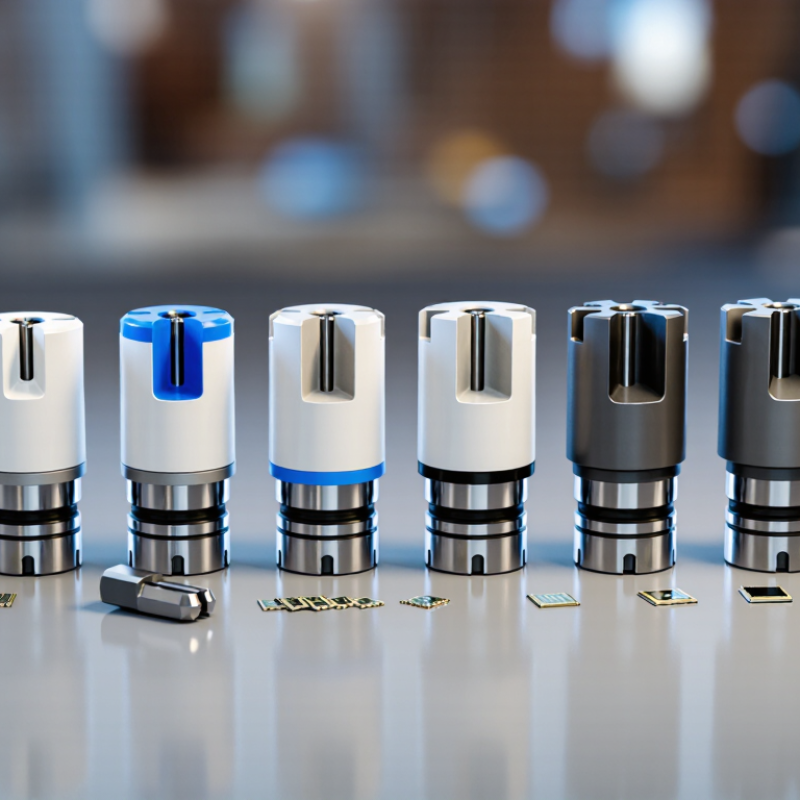
Die pick-up performance depends on the collet’s shape, material, and compatibility with the package. Common options include straight-wall, chamfered, vented, porous, anti-static, rubber-tipped, angled, stepped, custom-cavity, and mechanical-clamp collets. Each design controls contact pressure differently.

Ceramic collets resist heat and remain dimensionally stable during repeated cycles. Carbide offers strong wear resistance but may mark delicate surfaces. Stainless steel is practical for rigid dies, while PEEK and polyurethane provide softer contact.

Selection must match die dimensions, backside coating, adhesive residue, bump layout, and vacuum strength. A small mismatch can cause edge chipping or die rotation.

I have found that vacuum channels need careful inspection. Dust can block airflow. Poor cleaning can imitate a tooling problem. It is also wise to check the ejector pin position, pick-up force, cavity depth, and collet flatness under magnification. Anti-static materials help when fragile components attract particles, though their performance can change with humidity.

Tips: Test the collet with production-like dummy dies before full operation. Measure contact marks after several cycles, not just after the first pick. Keep a record of vacuum pressure, temperature, and failure patterns. A perfect fit on paper may still need adjustment.

How to Select, Maintain, and Replace the Right Die Pick Up Tool

Selecting a die pick up tool starts with the die, not the catalog. Check die size, thickness, backside condition, adhesive strength, and allowable contact force. A narrow tip may suit a small die, while a wider tip can reduce bending on thin silicon. The collet must center the die without crushing edges. Slight misalignment matters.

Yole Group’s 2024 advanced packaging report estimated a market of about 46 billion dollars in 2023, with growth toward 79 billion dollars by 2029. More delicate packages mean tighter handling control. Vacuum stability, tip flatness, and vertical travel should be verified during setup. SEMI’s World Fab Forecast also tracks more than 1,400 semiconductor facilities and production lines, showing how widely repeatable handling practices are needed.

Maintenance should be practical and measured. Inspect the tool under magnification after each shift or lot change. Look for chips, embedded adhesive, blocked vacuum holes, and polished contact surfaces. Clean with an approved solvent, then confirm vacuum response and pickup height. Do not assume a clean appearance means good performance. It often does not.

Replace a collet when edge chipping, pickup variation, vacuum leakage, or repeated die rotation appears. Record the lot, cycle count, material, and failure pattern. A fixed replacement interval is useful, but it is not perfect. Some tools fail early after one collision; others remain stable beyond the planned interval. Review the evidence before changing the interval. A simple test die can expose drift before production losses become expensive.

What Are the Top 10 Die Pick Up Tools and Collets?

Comparative suitability for common die handling applications, based on precision, package compatibility, surface protection, accessibility, and maintenance effort.

Vacuum pickup pens are generally preferred for flat, delicate dies, while collets and precision tips are better for controlled handling of specific package shapes. Select the tool according to die size, surface condition, allowable contact force, placement accuracy, and contamination-control requirements. Inspect tips and collets regularly and replace them when they become worn, deformed, contaminated, or unable to hold the die securely.